Economics-Watching: Will Tariffs Touch Off an Inflationary Impulse? Business Execs Think So.

[from Federal Reserve Bank of Atlanta, 21 August 2025]

Summary

Following the inflationary surge from 2021 to 2023, which was touched off by supply chain constraints and shipping bottlenecks, we evaluate a new panel of own-firm price and unit cost growth expectations in the Atlanta Fed’s Survey of Business Uncertainty for signs that the anticipated impact from tariffs is broadening beyond directly affected firms. We find evidence for the potential of tariffs to touch off another bout of high inflation. First, firms that are directly exposed to tariffs have increased their year-ahead price growth expectations sharply (by 0.7 percentage points). Second, firms that are not directly exposed to tariffs but are operating in industries that are highly exposed to tariffs anticipate a moderately higher trajectory for year-ahead price growth (0.3 percentage points). Third, this broadening of overall price pressures—a key feature of the pandemic-era inflationary impulse—is only partially offset by lower price increases from tariff-exposed firms that are operating largely in industries not exposed to tariffs.

Key Findings

  1. Firms, en masse, have increased their year-ahead price growth expectations since the end of 2024. This is especially true for firms directly exposed to tariffs.
  2. We find evidence of a broadening out of the influence of tariffs beyond those directly exposed. Unexposed firms in exposed industries anticipate a moderately higher trajectory of year-ahead price growth.
  3. The broadening of anticipated price growth is only partially offset by lower price growth expectations among tariff-exposed firms that are operating in largely unexposed industries.

Read the full article [archived PDF]

Economics-Watching: Why Businesses Say Tariffs Have a Delayed Effect on Inflation

[from the Federal Reserve Bank of Richmond, 8 August, 2025]

by R. Andrew BauerRenee Haltom and Matthew Martin

Regional Matters

Ever since new tariffs were enacted in early 2025, a key policy question has been what is the extent to which businesses will pass tariff costs through to prices, and when? The effects of a tariff are rarely straightforward, given, among other things, competitive dynamics and the challenges of implementation, but the historically large and changing nature of these tariffs have created additional levels of uncertainty over the effects.

In uncertain times, anecdotal evidence from businesses can be especially insightful. We are learning how businesses are reacting to tariffs through the Richmond Fed’s business surveys as well as through hundreds of one-on-one conversations with Fifth District businesses since the start of 2025.

These conversations showcase that navigating tariffs is a complex and sometimes protracted process for firms, particularly when there is uncertainty. Firms describe several reasons they may not have experienced the full impact of proposed tariffs yet (even when goods and countries they deal with are subject to them), as well as reasons that even when they have incurred tariff-related cost increases, there can be a delayed impact on pricing decisions.

Reasons Firms May Not Have Incurred Tariffs Yet

Business contacts describe several strategies or circumstances that can delay or reduce the tariffs on inputs or other imported items. These include the following:

As our monthly business surveys have found, many firms report deploying more than one strategy to delay tariffs. Notably, many of these delays are only temporary.

Reasons Tariffs May Have a Delayed Impact on Prices

Even when firms have incurred tariffs, they give several reasons why tariffs may not be immediately reflected in the prices they charge for their products. These include the following:

  • Waiting for tariff policy to clarify. Higher prices could reduce demand for goods and services and/or lead firms to lose market share, so many firms said they are hesitant to increase prices until they’re sure tariffs will remain in place. For example, a large national retailer said if tariffs are finalized at a sufficiently low level, they’ll absorb what they’ve incurred to date, but if high tariffs stick, they’ll have to raise prices. A steel fabricator for industrial equipment described being reluctant to raise prices on the 10 percent cost increases they’d seen thus far but would have to raise prices should the increases reach 12 to 13 percent. A grocery store chain was reluctant to raise prices and instead might reduce margins, which had recovered in recent years, to maintain their customer base. Some firms explicitly noted a strategy to both raise prices over time and pursue efficiency gains to cut costs and completely restore margins within a year or two.
  • Elasticity testing. Firms reported testing across goods whether consumers will accept price increases. A furniture manufacturer said he’s seen competitors pass along just 5 percentage points of the tariffs at a time so it isn’t such a huge shock to customers, though in that sector, “We all end in the same place which is the customer bearing most of it.” A national retailer said most firms are doing a version of stair-stepping tariffs through, e.g., raising prices a small amount once or twice to see if consumer demand holds, and if so, trying again two months later. This retailer said prices were going up very marginally in early summer, would increase more in July and August, and would be up by 3 to 5 percent by the end of Q4 and into 2026. Another national retailer said they would start testing the extent to which demand falls with price increases, e.g., when the first items that were subject to tariffs—in this case back to school items—hit shelves in late July.
  • Blind margin. Some firms reported attempting to pass through cost in less noticeable ways. While any price increase to consumers will be captured in measures of aggregate inflation, the fact that price increases may occur on non-tariffed goods might make it difficult to directly relate price increases to tariffs. An outdoor goods retailer said, “Unless it’s a branded item where everyone knows the price, if something goes for $18, it can also go for $19.” A national retailer plans to print new shelf labels with updated pricing, which will be less noticeable for consumers compared to multiple new price stickers layered on top. This takes time (akin to a textbook “menu cost” in economics), so it will not be reflected in prices until July and August. A grocery store said their goal was to increase average prices across the store but focus on less visible prices.
  • Selling out of preexisting inventory: Many firms noted they still have production inventory from before tariffs were announced, so they do not need to raise prices as long as they still sell these lower cost goods. A national retailer noted they have at least 25 weeks of inventory on hand for most imported products. A firm that produces grocery items said they will decide how much to raise prices as they get closer to selling tariff-affected products. Similarly, retailers order seasonal items quarters in advance. Many were receiving items for fall and winter when the new tariffs were going into effect in the spring. They paid the tariff then, but we won’t see the price increase until those items hit the shelves in the fall or winter. One retailer speculated that seasonal décor items will look the most like a one-time increase.
  • Pre-established prices. Many firms face infrequent pricing due to factors like annual contracts or pre-sales. For example, a dealer of farm equipment gets half its sales through incentivized pre-sales to lock in demand and smooth around crop cycles. They noted that while it would be difficult to retroactively ask those customers to pay for part of the tariff, they will pass tariffs directly through on spare parts. A steel fabricator for industrial equipment has a contract for steel through Q3, so they haven’t been impacted yet by price increases. However, they will face new costs once that contract expires.

In general, compared to small firms, large firms have more ability to negotiate with vendors, temporarily absorb costs, burn cash, wait for strategic opportunity, and test things out. This matters because large firms often lead pricing behavior among firms, so these strategic choices may influence the response of inflation to tariffs more generally. Even within firm size, one often hears that negotiations on price vary considerably by relationship and item.

Conclusion

A key question surrounding tariffs is whether any effects on inflation will resemble a short-lived price increase—as in the simplest textbook model of tariffs—or a more sustained increase to inflation that may warrant tighter Fed monetary policy. When asked in May what will determine the answer, Fed Chair Jerome Powell cited three factors [archived PDF]: 1) the size of the tariff effects; 2) how long it takes to work their way through to prices; and 3) whether inflation expectations remain anchored. The insights shared above suggest the process from proposed tariffs to the prices set by firms is far from instantaneous or clear-cut, particularly when tariff policy is changing.

Sensing from businesses suggests that the impact of tariffs on their price-setting [archived PDF] has been lagged, but it is starting to play out. Nonetheless, it remains highly uncertain how tariffs will impact consumer inflation. The discussion above makes clear that firms are nimble and innovative in the face of challenge, and they are concerned about losing customers in the current environment, particularly consumer-facing firms. We will continue to learn from our business contacts and share their insights.


Views expressed are those of the author(s) and do not necessarily reflect those of the Federal Reserve Bank of Richmond or the Federal Reserve System.

World-Watching: Old Problem, Modern Solution: Emerging Technologies for Anti-Corruption

[from Asia-Pacific Economic Cooperation, 29 July, 2025]

by Emmanuel A. San Andres and Glacer Nino A. Vasquez

Harnessing new tools to strengthen transparency and accountability can help APEC economies combat corruption and build public trust.

The Code of Hammurabi is one of humanity’s oldest surviving legal texts. Etched in basalt nearly four millennia ago, one of the many crimes it proscribes is corruption by a judge, for which the punishment is a hefty fine—“twelve times the fine set by him in the case”—plus removal and perpetual disqualification from office. Today, laws are published online rather than on stone tablets, but corruption remains a scourge across societies.

Thousands of years later, the fight against corruption continues. Corruption scandals continue to make headlines across the region, affecting both public and private institutions. Whether involving procurement fraud or illicit finance flows, these cases underscore how quickly trust can erode when institutions fail to adapt. The need for preventive systems, powered by data, backed by law and enabled by technology, has never been more urgent. Across APEC, the principles of transparency, accountability and integrity remain central to strong public institutions. As economies become more interconnected and more data-driven, emerging technologies are offering new ways to advance these goals.

APEC economies have long relied on oversight mechanisms such as audits, procurement rules, and internal checks to prevent, detect and prosecute corruption. These tools have been effective in fighting corruption, and they remain essential. But at the same time, new technology has also opened new pathways for corruption: The discreet meeting at a coffeeshop may now occur over an encrypted messaging app, and the cash-filled envelope replaced by a cryptocurrency transfer.

As corrupt actors grow more technologically sophisticated, so too must anti-corruption efforts. APEC economies are not new to digital solutions—e-government and e-procurement portals have reduced opportunities for hidden transactions. Beneficial ownership registries and asset tracking systems make it easier to prosecute and penalise incidents of corruption when they do occur. But emerging technologies offer even more powerful tools to prevent, detect and deter corruption.

For example, artificial intelligence and machine learning (AI/ML) enable real-time monitoring, risk scoring, pattern detection, and predictive analytics. These tools can support monitoring and investigation by automating document review and evidence gathering. AI/ML can also enhance institutional capacity through adaptive, personalized training systems.  Meanwhile, advanced data analytics can support the review of large volumes of data, revealing patterns of corrupt activity and informing decision-making. When data from different sources are connected, it becomes easier to understand corruption risks early and act with greater precision.

Blockchain—the technology that enables cryptocurrencies—can be used to create immutable, transparent ledgers for government transactions, supply chain monitoring and secure identity management, making it harder to conceal corrupt activity. Remote sensing and facial recognition technologies also offer potential in compliance monitoring and anomaly detection.

However, implementing these emerging technologies have their share of challenges and risks. The effectiveness of AI/ML systems is only as good as the quality, integrity and objectivity of the data they are fed; biased inputs can produce biased outcomes. Blockchain technology is very energy-intensive, which may hinder its scalability and availability. Facial recognition raises serious concerns over privacy and due process, enabling widespread surveillance without individual consent.

These trends mirror growing international momentum around the digitalization of integrity systems. International organizations are helping lead the way: the OECD is leveraging AI and big data to detect corruption risks and improve compliance, while the World Bank’s Governance Risk Assessment System [archived PDF] uses analytics to uncover fraud in public procurement, with pilots already underway in Brazil. As stewards of major anti-corruption conventions, these institutions are turning innovation into accountability. For APEC economies, this alignment offers a timely opportunity to shape global standards while advancing domestic reform.

It is also important to recognize the central role of human and institutional elements in anti-corruption efforts. Emerging technologies are not a silver bullet; they will only be effective if they are well integrated into government processes and are aligned with the skills of the people who need to use them. Training and capacity building will be essential to bridge capability gaps, while a committed leadership will be needed to implement the legal reforms and oversight structures needed to ensure effective adoption.

Buy-in from anti-corruption stakeholders across government, the private sector and civil society is also crucial to this pursuit. Technologies like AI/ML and advanced analytics require large volumes of reliable data, requiring cooperation and information sharing. Public understanding and trust, ethical use of data and equitable access to technology are all essential to ensuring long-term success.

APEC economies are at different stages of readiness to adopt these emerging technologies. While some economies have yet to develop adequate digital infrastructure, human capital and institutional structures, others are already in a position to expand or integrate more advanced anti-corruption tools into their day-to-day processes. Capacity building, information sharing and dialogue can help narrow this gap while learning from the experiences of those ahead.

This is where regional cooperation can make a difference APEC provides a platform for knowledge sharing, capacity building and policy cooperation. The Anti-Corruption and Transparency Experts Working Group could provide a venue for a collaborative strategy to mainstream emerging technology in anti-corruption work, while building technical capacity for economies that need it. Likewise, the upcoming APEC High-Level Dialogue on Anti-Corruption Cooperation provides an opportunity to reaffirm values and shared commitments in the fight against corruption.

Corruption has existed since the dawn of civilization. As methods to commit corruption have evolved, so must the tools to combat it. People and institutions will always remain at the heart of anti-corruption efforts, but with the right governance and safeguards, emerging technologies can be game-changers in fighting corruption and recovering its proceeds, whether it’s in Babylonian sheqels or in bitcoins.

Emmanuel A. San Andres is a senior analyst, Glacer Niño A. Vasquez is a researcher at the APEC Policy Support Unit. For more on this topic, read the latest issue paper “Technologies for Preventing, Detecting, and Combatting Corruption [archived PDF].

World-Watching: U.S. Greenlighted H20 Chips Export on Its Own Initiative, China Says

Beijing clarifies its deal with Washington didn’t include NVIDIA’s 4th-best AI chip, disputing widely-reported comments by U.S. Commerce Secretary Howard Lutnick

by Zichen Wang, from Pekingnology

The U.S. greenlighted NVIDIA’s China-specific Artificial Intelligence chip, known as the H20, for export to China on its own initiative, China said on Friday.

In a statement dedicated to the recent U.S. approval of the semiconductor giant’s 4th-best Artificial Intelligence chip, China’s Ministry of Commerce said on its website that in early July, the U.S. had already lifted restrictions on China under the agreement reached between the two countries in London.

“We have taken note that Washington has now taken the initiative to announce it will authorize sales of NVIDIA’s H20 chips to China,” the trade ministry added.

Beijing’s clarification stands in stark contrast to widely reported public comments earlier this week by U.S. Commerce Secretary Howard Lutnick, who told Reuters on Tuesday that “We put that in the trade deal with the magnets,” referring to the agreement made to restart Chinese rare earth shipments to U.S. manufacturers. He did not provide additional details, according to Reuters.

NVIDIA’s H20 was designed to be technologically inferior. The company also sells three other chips that far surpass the H20’s power.

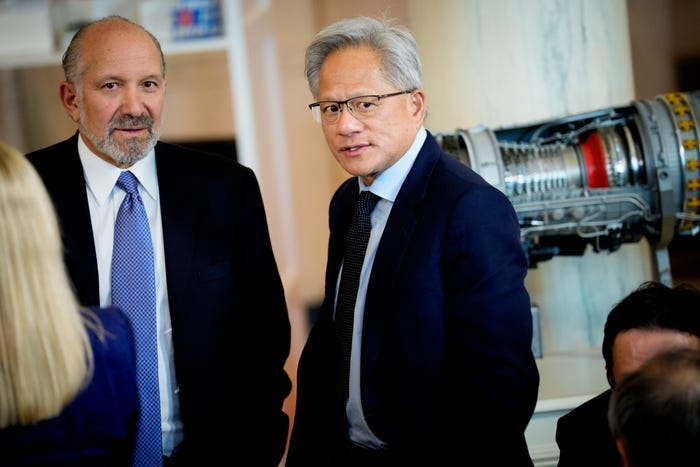
Commerce Secretary Howard Lutnick echoed NVIDIA CEO Jensen Huang’s view of why a U.S. company should sell chips to China. Andrew Harnik/Getty Images

On Monday, July 14, the Silicon Valley company announced in a blog post that the U.S. government had approved the sale of the H20, three months after the Donald Trump administration shut down NVIDIA’s artificial intelligence chip sales to China, after CEO Jensen Huang met President Trump in Washington D.C., and before he departed for Beijing.

Huang dominates Chinese headlines this week with his speech at an industry conference and public events with Chinese AI leaders. He visited China’s Ministry of Commerce and was received by Wang Wentao, the minister, on Thursday.

商务部新闻发言人就美批准对华销售英伟达H20芯片有关情况答记者问

MOFCOM Spokesperson Responds to Questions on the U.S. Approval of NVIDIA H20 Chip Sales to China

2025-07-18 13:43

Question:

U.S. officials have recently stated that Washington’s decision to approve sales of NVIDIA’s H20 chips to China is part of ChinaU.S. economic and trade negotiations. They also claimed that Chinese firms, including Huawei, are already producing equivalent chips domestically and that the United States does not want China to achieve full import substitution. How does the Ministry of Commerce (MOFCOM) view this?

Answer:

Following the ChinaU.S. economic and trade consultations in London, the two sides have maintained close communication, finalized the “London framework,” and moved forward with implementation. China, in accordance with its laws and regulations, approves export applications for controlled items that meet the necessary criteria. In early July, the United States reciprocally lifted the restrictions on China that had been discussed during those talks.

We have taken note that Washington has now taken the initiative to announce it will authorize sales of NVIDIA’s H20 chips to China. Beijing believes the United States should abandon a zero-sum mentality and continue to roll back a range of unwarranted trade and technology restrictions on China.

Cooperation and mutual benefit are the only viable path; suppression and containment lead nowhere. In May, the United States issued new export-control guidelines targeting Huawei’s Ascend chips, tightening restrictions on Chinese semiconductor products under unfounded pretexts. By wielding administrative power to distort fair market competition, these measures severely undermine the legitimate rights and interests of Chinese companies. China has made its position clear and firmly opposes such actions.

We look forward to the United States working with China in a spirit of equality to correct these erroneous practices, foster a sound environment for mutually beneficial cooperation between the two countries’ enterprises, and jointly safeguard the stability of global semiconductor supply chains.

Economy-Watching, USA: Global Supply Chain Pressure Index: April 2023 Update

[from the Federal Reserve Bank of New York]

A new reading of the Global Supply Chain Pressure Index has been posted.

Estimates for March 2023

  • Global supply chain pressures decreased again in March, falling from 0.28 to 1.06 standard deviations below the index’s historical average.
  • There were significant downward contributions by many of the factors, with the largest negative contributions from European Area delivery times, European Area backlogs, and Taiwanese purchases.
  • The GSCPI’s recent movements suggest that global supply chain conditions have largely normalized after experiencing temporary setbacks around the turn of the year.

The GSCPI compiles more than two dozen metrics across seven economies—data on global transportation costs and regional manufacturing conditions—to track shifts in supply chain pressures from 1997 to the present.

The GSCPI is updated regularly at 10 AM ET on the fourth business day of each month.

The GSCPI is a product of the Federal Reserve Bank of New York’s Applied Macroeconomics and Econometrics Center.

View the index.

Facing the Global South: Building a New International System by Yang Ping

“If you raise [the development of the BRI] to the strategic level, there are countries where … you will have to lose money and there are countries where you will be free to make money.”

by Thomas des Garets Geddes, Sinification

Dear Everyone,

How to respond to the growing political divide between China and the West marked by partial decoupling, security alliances, and the risk of sanctions, amongst other things, continues to be a major topic of discussion among China’s intellectual elite. As already evidenced in previous editions of this newsletter, opinions vary considerably. Those presented here so far have ranged from Da Wei (达巍) stressing the importance of preserving if not strengthening ties with the West and Shen Wei (沈伟) arguing in favor of reforming the WTO and building up a network of free trade agreements to Ye Hailin (叶海林) emphasizing the need for China to demonstrate its military might to demobilize U.S. allies and Lu Feng (路风) calling for self-reliance and greater assertiveness in the field of tech. A certain amount of overlap certainly exists among these perspectives but the differences are nonetheless striking.

Today’s edition of Sinification looks at a speech made last month by Yang Ping (杨平), head and editor-in-chief of the highly regarded Beijing Cultural Review (文化纵横, hereafter BCR). Yang is also director of the Longway Foundation (修远基金会) which publishes BCR. The foundation describes its publication as “the most influential magazine of intellectual thought and commentary in China” and sees itself as having a key role in helping shape the direction of intellectual debates in China (“议题的设置就是意识形态斗争成功的一半”). Indeed, BCR often republishes old articles at key junctures as so often highlighted by David Ownby’s wonderful Reading the China Dream.

The following are excerpts from an edited transcript of a speech by Yang made at an event hosted by Renmin University’s Chongyang Institute for Financial Studies, which was attended by China’s Vice-minister of foreign affairs Xie Feng (谢锋). In his speech, Yang advocates building a new international system led by countries in the Global South (which, of course, includes China) rather than the West. His ideas are not particularly novel but are nevertheless noteworthy in that they represent yet another viewpoint in the ongoing debate over how China should respond to the increasing tensions that characterize its relations with the U.S. and other Western countries. Next week, I will be sharing a somewhat longer piece that proposes a way of protecting China from the growing threat of Western sanctions.

Yang’s speech in a nutshell:

  • Capitalist politics” are no longer in line with “capitalist economics.” The former now undermines globalization, while the latter supports it.
  • Sanctions, export controls, friend-shoring and alliance-building are damaging the world economy and further alienating China from the current U.S.-led international order.
  • China must respond to this growing trend by building a “new type of international system” with other countries in the Global South.
  • BRI projects should be increasingly focused on achieving this goal and thus allow more room for loss-making endeavors.

Capitalist politics ≠ Capitalist economics

“Since 2022 and the Russo-Ukrainian conflict, our main focus and topic of discussion has been China’s construction of a new type of international system.

“The most important feature of today’s world is the beginning of a separation between capitalist politics and capitalist economics. The capitalist political order and the capitalist economic order do not support each other [any longer].

“We have witnessed two typical manifestations of the separation of politics and the economy and the impact of politics on the economy:

  1. The first is the conflict between Russia and Ukraine. The sanctions imposed on Russia by the United States and the West have reached unthinkable, abominable [令人发指] and unimaginable proportions. Under established international rules, it was understood that such sanctions could not possibly occur, but now they have. These include the fracturing of the financial system, the expropriation and seizure of Russian private assets and the freezing of Russian foreign exchange reserves. These are all abominable and unimaginable forms of confrontation. At the same time, the Russo-Ukrainian conflict has led to serious disruptions in global food and energy systems and supply chains, with massive food ‘shortages’ and soaring food prices, particularly in developing countries. Sanctions and political repression [政治打压] have severely disrupted the [world’s] economic order.
  2. The second is the conflict between the U.S. and China. Since the Trump era, the U.S. has been engaged in a trade war against China, mainly by raising tariffs. Basically, this was simply about balancing trade [with China] and used mainly economic means. But under Biden, it [has become] a war that mixes politics with economics. Biden’s strategy towards China can basically be summed up in just a few words: one, friend-shoring, [i.e.] only allowing friendly countries into [parts of] its supply chains; two, alliance politics, [i.e.] continuously forging an alliance system involving NATO, the European Union, Japan, AUKUS and the four Asia-Pacific countries [I assume he is referring to South Korea, Japan, New Zealand and Australia taking part for the first time in a NATO summit last year] and constantly opposing China [不断应对中国]; three, its so-called ‘precision strikes’, [i.e.] its radical crackdown on China’s high tech [industry], especially our chip industry.”

China is being pushed out of the U.S.-led international system

“The information I have seen so far is that the number of Chinese companies included in the U.S.’s ‘entity list’ has risen from 132 under Trump to over 530 now. The scope of such point-to-point [点对点] precision strikes is constantly expanding. With such a political impact on the economy, we can feel the [world’s] economic order being disrupted across the board. The world is moving inexorably in the direction of decoupling. The phenomenon of politics affecting the economy and the capitalist political order no longer upholding the capitalist economic order are extremely striking.

“In such a context, the challenges now facing China are extremely serious and varied. We have the pressures of dealing both with containment in the Indo-Pacific and with the U.S.-led politics of alliances across the world. More importantly and fundamentally China faces the strategic task of building a new type of international system [新型国际体系] … The existing Western-dominated international system used to be one in which we tried hard to blend [so as] to become one with it. During this process, we [sought to] absorb the West’s advanced technologies and management [practices] and thus complete our mission of industrialisation and modernization.

“But once you enter the existing international system, he [who is already inside] does not want to play with you, and even wants to drive you back out. He wants to divide both supply chains and the economic system into two parts [搞成两套] and desperately wants to contain and suppress you. This is not something that can be determined by your own subjective preferences. He has made up his mind: you have already become his ‘fated opponent’ [命定的对手]. He has to suppress you and drive you out of the existing system.”

Building a new international system with the Global South

“It is at this point that China is faced with the task of constructing a new type of international system that is not dominated by the West. In today’s so-called strategic quadrangle consisting of the U.S., Europe, Russia and China, how to construct such an international system appears particularly difficult [逼庂 literally means ‘narrow’ or ‘cramped’ rather than ‘difficult’].

“But if we look a little further south, we will find a vast number of developing countries, the Third World and the countries of the global South. They should be our strategy’s depth [我们的战略纵深]. That is to say, [we should] build a new type of international relations and a new type of international system that has strategic depth and in which China and the countries of the global South are jointly integrated. [This] is, in my view, an important strategic task for China’s international relations in the coming decades.”

BRI projects: Strategy trumps profitability

“For China today, especially for businesses and governments at all levels [within China] that are currently working hard to develop BRI trade, there is a very important point to which they should be alerted or reminded about: the development of the BRI has to go beyond mere business, beyond the general export of [China’s excess] production capacity, beyond the partial thinking of industry and the partial thinking at the regional level, or the simple economic way of thinking of business. The development of the BRI should be considered at the strategic level. That is, it should be included into China’s strategy when thinking about Africa, South America, Southeast Asia and Central Asia.

“If you raise [the development of the BRI] to the strategic level, there are countries where you won’t be able to make money and will have to lose money, and there are countries where you will be free to make money. You have to unite the two within your organic strategy.

“The strategic task of building a new type of international system is, in my view, a strategic proposition that Chinese think tanks and research institutes should pay very close attention to with regards to international relations.

“Time is limited today. I just wanted to make a start here. I hope to receive your corrections and criticisms. Thank you!”

[Subscribe to Sinification]

The recessive importance of the Global South was previously explored by Richard and his partner Larry, with input from Supratik Bose, many decades ago as shown here.

Webinar: Creating Differentiation in an Increasingly Competitive Logistics Market

[from FreightWaves]

You can’t control what you can’t see. The market is feverishly growing as more 3PLs see visibility as a strategic advantage. Given the communications and compliance blind spots in a supply chain where double loading and double brokering have become more common and 3PLs are turning to unfamiliar carriers in a search for capacity, 3PLs with superior technology can separate themselves from the pack. 

Join FreightWaves as they partner with Overhaul for a live webinar on Thursday, August 4 at 11 AM ET (45 minutes), where they will discuss how you can win in the current market not just by being reliable—but by being transparent and proving the integrity and security of the products you’ve been trusted to move.

Featured speakers will include:
• Frankie Mossman, Chief Customer Officer, Overhaul
• Sara Lieser, Senior Vice President of Partnerships, Overhaul 

Register today to join FreightWaves & Overhaul for the live session.

The Early Universe and the Future of Humanity/Xi Risks Losing the Middle Class

[from The Institute of Art and Ideas]

The Life and Philosophy of Martin Rees

An Interview with Martin Rees

Astronomer Royal and best-selling science author, Martin Rees pioneering early work led to evidence to contradict the Steady State theory of the universe and confirm the Big Bang. His influence then spread to the wider public—knighted in 1992, elevated to Baron in 2005, then giving the Reith Lectures in 2010. Most recently his attention has turned from the early universe to the future of humanity. In this interview, Lord Rees discusses the ideas and experiences which led to such an illustrious career.

Xi Risks Losing the Middle Class

The zero-COVID strategy has run its course

Kerry Brown | Professor of Chinese Studies and Director of Lau China Institute, King’s College London. He is the co-editor of the Journal of Current Chinese Affairs, and author of Xi: A Study in Power.

China is continuing with its tough zero-COVID policy. But the cracks in the economy and a discontent middle class mean that Xi’s Imperial-like governing style is under challenge, writes Kerry Brown.

China’s zero-COVID strategy operates in Chinese domestic politics a bit like Brexit does in the UK. Despite complaints from business networks and broader society about the negative impact on economic growth and citizens’ freedoms, it’s a policy commitment the government is sticking to no matter what.

Of course, no one voted for the draconian lockdowns implemented across China. And, unlike Brexit, the lockdowns are very much in line with expert advice in the country, rather than running against it. The Chinese Centre for Disease Control and Prevention (CCDC), the main governmental body advising the government over crisis response in this area, said in a weekly update last November that without comprehensive restraints on people’s movement and quarantines on anyone testing positive for the virus, the national health system would soon be overwhelmed with cases, and find itself in the same bind as those in the US or Europe did.

That the words of the experts have been taken so much in earnest is striking for a regime that previously hasn’t been shy to dismiss them. The Xi leadership may be confident in the way it speaks to the outside world, but it seems that it has the same profound wariness in the robustness of the country’s public health as everywhere else. Things have not been helped by clinical trials showing the Chinese vaccines – the only ones accepted in China – are not as effective as foreign ones where the length of protection is in question). On top of this, vaccine take-up by the elderly, the most vulnerable group, has been poor. It is easy to see therefore why the central government might be very cautious. What is harder to understand, however, is why the cautiousness has bordered on obsessiveness.

The Xi way of governing is increasingly almost imperial in style, with broad, high-level policy announcements made in Beijing, sometimes of almost Delphic succinctness.

One scenario is simply about the structures of decision-making in China. This was an issue right from the moment the variant started to appear in late 2019, and local officials in Wuhan stood accused of trying to hush the issue up, delaying reporting to the central authorities till things had already gone on too long. As a result of this, in February 2020 key officials in the city were sacked. But this is unlikely to change the fact that provincial officials are very risk averse under Xi, and that any central direction to manage the pandemic will be interpreted in the purest terms and executed to the letter.

This explains the completeness of the Xian government’s virtual incarceration of its 8 million population after just a few COVID cases at the end of 2021, the first of the more recent lockdowns. It also explains why the traditionally more free-thinking municipal authority of Shanghai and its similarly liberal approach was fiercely knocked back by Beijing last February, to make an example for any other provinces thinking of going their own way. The absolute prohibition on people moving from their homes there, in one of the most dynamic and lively cities of modern China, was perfect proof that if the government could bring about this situation there, it could do it anywhere.

This case study also reveals some important things about the Xi way of governing. It is increasingly almost imperial in style, with broad, high-level policy announcements made in Beijing, sometimes of almost Delphic succinctness, which are then handed down to various levels of government to do as they will. Exactly how and when the discussion amongst Xi and his Politburo colleagues on the best response to COVID happened is unclear. In a world where almost every political system seems to leak incessantly, the Chinese one is unique in maintaining its opacity and secretiveness – no mean achievement in the social media era.

The Communist Party is very aware of how relatively small incidents can mount up and then generate overwhelming force. It itself coined the Chinese phrase ‘a single spark can start a prairie fire.’

Rumors of clashes between Xi and his premier Li Keqiang on the effectiveness of the current response remain just that – rumors, with precious little hard evidence to back them up. Who in the current imperial system might dare to speak from the ranks and say that policy must change is unclear. Scientists should deal in hard facts – but we all know that science is susceptible to politicization. Experts in China have to offer their expertise in a highly political context. A declaration that the current approach is not fit for purpose can easily be reinterpreted as an attempt to launch an indirect attack on the core leader. With an important Congress coming up later this year, at which Xi is expected to be appointed for another five years in power, sensitivities are even more intense than normal. It is little wonder that the COVID strategy status quo settled on last year has not shifted.

Things, however, may well change, and change quickly. China is moving into tricky economic territory. The impact of the pandemic on global supply chains, along with the various stresses domestically on the housing market, and productivity, have shrunk expectations for growth. A predicted 6% in the earlier part of the year now looks overly ambitious. There is a real possibility China might experience a recession. At a moment like this, the government, which after all operates as a constant crisis and risk management entity, might do what it does best and prompt rapid, and dramatic, changes.

The handling of COVID-19 might look like further proof that Chinese politics under Xi is repressive and zero-sum. But even in an autocratic state like the current People’s Republic, the pandemic will not leave politics unchanged.

This doesn’t mean that China’s COVID-19 bind gets any easier. Like the country’s serious demographic challenges, with a rapidly aging population, the only thing the government will be picking an argument with is reality as it proceeds into the future. As with Europe and the US, being more liberal about facing COVID-19 will involve accepting some of the harsh consequences – rising fatalities, particularly for the elderly and vulnerable, and health systems put under enormous stress. In such a huge, complex country, and of enormous geopolitically importance, a misstep could easily lead to huge and unwanted consequences, generating discontent and triggering mass protests in a way reminiscent of 1989. The Communist Party is very aware of how relatively small incidents can mount up and then generate overwhelming force. It itself coined the Chinese phrase ‘a single spark can start a prairie fire.’ One such spark – the introduction of Marxism into China in the 1910s – led to its gaining of power three decades later.

The handling of COVID-19 might look like further proof that Chinese politics under Xi is repressive and zero-sum. But I suspect that even in an autocratic state like the current People’s Republic, the pandemic will not leave politics unchanged. In particular, the middle classes in cities like Shanghai have had their patience tested in recent months. This is the key group for Xi, the heart of his new innovative, more self-dependent, higher-quality service sector workers in an urbanized economy. Their support remains crucial if Xi is able to steer China towards the moment when it hopes it will become the world’s largest economy. Policies to try to placate them by addressing imbalances, critical environmental issues and improving public health are likely to only increase. Delivery however will be key.

Faced with a potentially life-threatening infectious disease, the Party can throw out injunctions and claim it has been the victim of bad luck. But an ailing economy and no clear signs of the government knowing how to manage this will prove a toxic mixture for it. Xi and his third term in office will be all about delivery. The question is whether, even with the formidable suite of powers he has, he can do this. Governing China has always been the ultimate political challenge. COVID-19 has made that even harder.

Global Supply Chain Pressure Index: July 2022 Update

[from the Federal Reserve Bank of New York, Applied Macroeconomics and Econometrics Center]

A new reading of the Global Supply Chain Pressure Index has been posted.

The GSCPI compiles more than two dozen metrics across seven economies—data on global transportation costs and regional manufacturing conditions—to track shifts in supply chain pressures from 1997 to the present.

The GSCPI is updated regularly at 10:00am ET on the fourth business day of each month.

Estimates for June 2022
  • Global supply chain pressures declined in June, continuing the decrease we observed for May.
  • The June decline was mostly due to a large decrease in Chinese supply delivery times.
  • The moves in the GSCPI over the past three months suggest that although global supply chain pressures have been decreasing, they remain at historically high levels.

The GSCPI is a product of the Federal Reserve Bank of New York’s Applied Macroeconomics and Econometrics Center.

View the Index.

Russia-Watching: Economic Dysfunctionalities

[from the Russian Analytical Digest]

This issue deals with dysfunctionalities in the Russian economy. The first three contributions look at the direct impact of sanctions. Ilya Matveev provides an overview, while Andrei Yakovlev compares the government’s anti-sanctions measures to its reaction to the economic impact of the COVID-19 pandemic. Janis Kluge offers a more detailed picture of the short- and long-term effects of the unfolding sanction regime. Michael Rochlitz then goes on to explain the lack of strategic planning in the country’s economic policy. Finally, Olga Masyutina and Ekaterina Paustyan provide a case study of inefficient governance mechanisms looking at waste management.

Read the full issue [archived PDF].

Analyses

Sanctions against Russia: No Blitzkrieg, but a Devastating Effect Nonetheless

by Ilya Matveev

In response to the Russian invasion of Ukraine, over 40 countries have introduced sanctions against Russia. The new restrictions concern finance, trade, logistics, and personal sanctions against businessmen and officials. In addition, more than 1,000 companies have ceased or limited their activities in Russia. In this article, Ilya Matveev argues that the sanctions, despite their unprecedented scale, have not led to the collapse of the Russian economy, yet their effect is dramatic, multi-faceted, and will increase over time.

Read the full issue [archived PDF].

Fighting the Pandemic and Fighting Sanctions: Can the Russian Economy Now Benefit from Its Experience with Anti-Crisis Measures?

by Andrei Yakovlev

Faced with tough international sanctions in reaction to its war against Ukraine, the Russian government has resorted to measures developed during the COVID-19 pandemic in order to stabilize the economy. This short analysis discusses the rationale behind this approach and demonstrates its limits.

Read the full issue [archived PDF].

Russia’s Economy under Sanctions: Early Impact and Long-Term Outlook

by Janis Kluge

Four months after a coalition of Western states imposed unprecedented sanctions on Russia, the Russian economy seems to be holding up better than expected. The Central Bank has managed to stabilize the country’s financial system and Russian officials are trying to project optimism about the future. However, this optimism is likely to be short-lived. The sanctions’ effects are only just beginning to unfold: supply-chain problems are intensifying and demand is falling quickly. In the longer run, Russia’s economy will become more primitive as it partially decouples from international trade. To avoid social tensions, the government will intervene to support Russian businesses, leading to more protectionism and a larger state footprint in the economy.

Read the full issue [archived PDF].

Why Russia Is Lacking an Economic Strategy for the Future

by Michael Rochlitz

Even before the economic crisis caused by Russia’s full-scale attack against Ukraine and the ensuing sanctions, the Russian economy was plagued by a number of growing problems. As a result, Russia’s economy has hardly grown for almost a decade, with an average annual growth rate of just 0.5% between 2013 and 2021. However, the Russian government does not have a strategy for addressing the fundamental economic challenges that are looming just over the horizon. There also seem to be no public debates about these challenges, whether in the policy circles around the government or among the wider public.

Read the full issue [archived PDF].

The Political Economy of Waste Management in Russia

by Olga Masyutina and Ekaterina Paustyan

The problem of household waste is one of the numerous environmental challenges facing Russia today. The 2019 nation-wide waste management reform was designed to tackle this problem by promoting recycling. However, the reform is stalling, due in large part to the nature of state-business relations in Russia. The lack of transparency in the public procurement process and the importance of personal connections between businesses and the federal and regional authorities undermine the implementation of the reform and produce suboptimal outcomes in the fight against waste.

Read the full issue [archived PDF].