Taiwan Elections Show What the People Really Care About

China barely factors, as local issues like housing, employment and public safety drive voter choice

[by Tim Culpan, from Sinocism]

Tim Culpan is a journalist and 27-year Taipei resident. Tim worked for Bloomberg News as the Taipei technology correspondent and then opinion columnist until 2024, when he went independent and launched the excellent Culpium on Substack.

Good Evening from Taipei,

A few weeks ago I pitched to Bill the idea of writing a piece for Sinocism about the November 28 Taiwan municipal elections. City and county mayors will be elected, along with thousands of other local representatives. It’s not a nationwide poll.

“It’s a plebiscite on local issues,” I told him.

My reason for publishing through Sinocism, instead of my own outlet Culpium is that Sinocism is the premier foreign destination for discussion on China politics and policy. I could foresee that many people would mistake this local Taiwanese election as some kind of referendum on Taiwan’s China policy.

I recognize the irony of publishing a piece arguing that Taiwan’s election is not about China in a publication focused on China. But by explaining the nuances of Taiwanese domestic issues, my hope is that China watchers will understand how and why citizens in this democracy make decisions. Quite often these decisions appear counter to what outsiders feel should be the wise & logical choice vis-à-vis Beijing.

Sinocism readers seem like the perfect audience for such a discussion, and I am grateful to Bill for lending me your ears.
One Election; 11,000 Positions

Taiwan has 23 million people, 19.7 million voters, and 22 cities and counties. Candidates are vying for four-year terms and can serve a maximum of two terms. Victory is determined by a first-past-the-post system with no preferences and no postal or electronic voting. Whomever gets the most votes from in-person voting wins, even if it’s not a majority.

Among the seats to be filled are mayors (city), magistrates (county), and municipal councilors.

Yet Taiwan’s administrative divisions get even smaller, like Russian nesting dolls, all the way down to local villages and neighborhoods (also called wards or burroughs). All up, 11,051 seats are to be filled, and village chiefs (村長 – cunzhang) plus neighborhood captains (里長 – lizhang) will account for more than 7,700 of those positions.

The largest electorate to be served by this election is New Taipei City with 4 million residents, the smallest being Rongxin Village in Nantou County with just 36 souls.

My point is that this really is local. Super local. As a result, policy focus is on local rather than national issues.

All Politics is Local

What voters care about most varies by region. In the north (Taipei, Keelung, Taoyuan), housing and urban renewal is a key concern, alongside transport and public safety. In the center (Taichung, Changhua), food scandals and public health predominate. While in the south (Tainan, Kaohsiung), wages and flood control are particularly local topics.

This regional variation dilutes the value of national-level policies and reduces the importance of broad party platforms. As a result, the Kuomintang’s (KMT) perceived pro-business reputation carries less weight while the Democratic Progressive Party’s (DPP) old-school social justice platform is getting fresh oxygen.

To be clear, it shouldn’t be taken as fact that the KMT is pro-business and the DPP is pro-social. There’s plenty of evidence to suggest the reverse is sometimes true. Yet, the basic ideological divide persists in the same way that the Tories and Labour occupy different sides of the UK political spectrum.

Taiwanese Taipei

Traditionally, Taichung in central Taiwan is seen as a “swing state” and barometer of changing political winds across the country. Taiwan’s geographical layout almost perfectly maps to its political layout. Taipei and New Taipei City in the North are deep blue (KMT) while Tainan and Kaohsiung in the South are deep green (DPP). These shades start to blend as you move toward Taiwan’s geographic center.

This year, however, something extraordinary is happening.

Taipei City, the national capital and seat of economic power, may change colors. The KMT’s Chiang Wan-an won the 2022 mayoral election, but there’s a high chance he’ll lose his post this election.

Instead, polling shows that it’s likely the DPP will take Taipei City Hall for the first time since Chen Shui-bian’s single four-year term which spanned 1994–1998. (The “whites,” led by independent populist Ko Wen-je, split the vote of the two major parties and took Taipei City from 2014 to 2022).

Surveys have them within a few points of each other, and the margin of error is such that I am not confident calling this race. Also, you won’t see new polls in the coming week because Taiwanese law prohibits them from being published in the 10 days leading up to an election.

Chiang is claimed to be a great-grandson of Generalissimo Chiang Kai-shek through an extra-marital affair, with his family name enjoying the cachet that comes with such a connection. To his credit, though, Chiang’s resume is impressive in its own right with academic credentials that culminate in a Juris Doctorate Degree (JD) from UPenn’s Carey Law School and admission to the California Bar.

City Vision

But voter’s adulation for Chiang is waning amid dissatisfaction over very local issues. Clean, efficient, and friendly on the surface, Taipei City is getting old. Vast tracts of its housing stock is over 30 years old with residential communities a stone’s throw from City Hall that are close to 50 years old (and which look every bit their age). At the same time, there’s a lack of new affordable housing coming on stream.

Urban renewal policies, which allow a building to be torn down and rebuilt if enough owners approve the measure, were supposed to ameliorate this problem. But the slow pace of new projects and the bureaucratic minefield involved with rehousing residents has caused great dissatisfaction among voters. Add to that a litany of small gripes like scooter parking, public smoking, traffic safety, and elder loneliness, and Chiang’s leadership has started to feel lacklustre in the eyes of many voters.

His challenger, Puma Shen of the DPP, has come out of the gate with a more polished vision for the city which he is pitching to voters under the slogan HEART (Habitat, Empower, Accompany, Resilience, Time). In truth, Shen’s policies aren’t vastly different to Chiang’s, but he’s successfully managed to stoke a renewed sense of pride among Taipei residents.
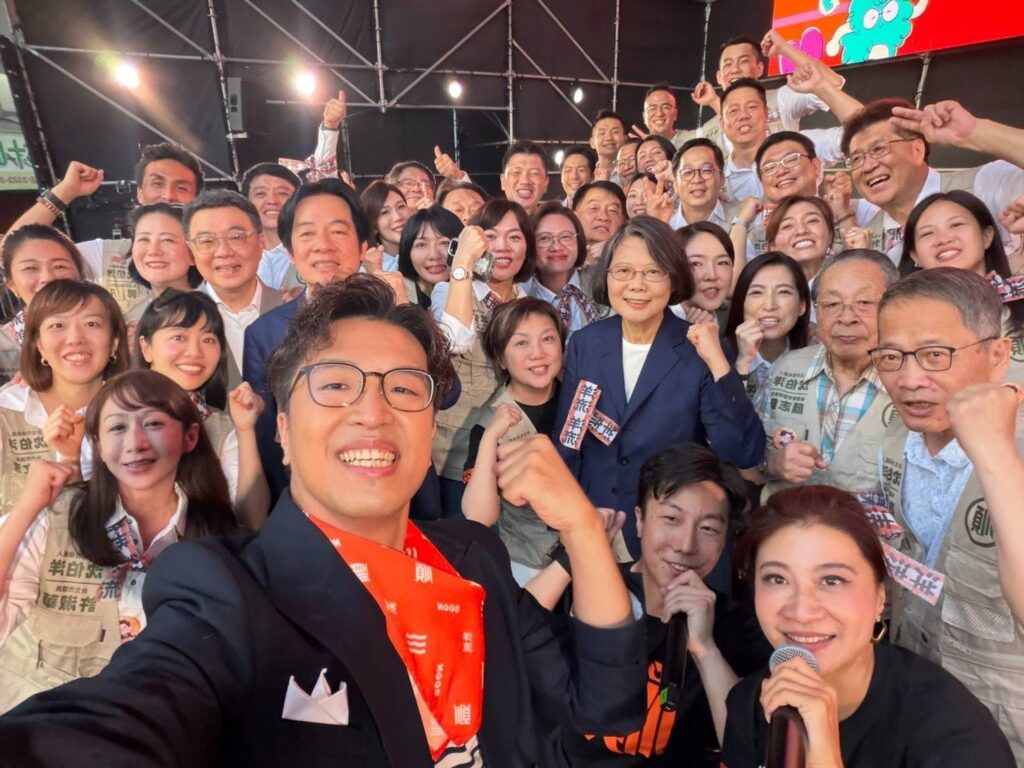
DPP’s Taipei Mayoral Candidate Puma Shen at a campaign rally with supporters, including President Lai Ching-te (immediately behind) and former president Tsai Ing-wen (behind, right). Photo: Puma Shen Campaign Office

Currently a national legislator, Shen is a former criminology professor who gained recognition for his research into Chinese disinformation and cognitive warfare against Taiwan. That career trajectory took him to founding Doublethink Lab, focused on cognitive warfare, and Kuma Academy, which conducts research and training into urban resilience (read: preparing for war).

Perhaps surprisingly, Shen’s China-focused background has barely featured in this campaign. Clumsily, though, Beijing has managed to burnish his credentials through a series of operations aimed at surveilling and curtailing him.

Local Matters Matter

Elsewhere in Taiwan, national issues like macroeconomic policy, defense, and China relations have also taken a backseat. In fact, political leaders have been excoriated for pandering too much to national interests over local issues.

Outgoing Taichung Mayor Lu Shiow-yen, for example, was once seen as a rising star within the KMT for her leadership in the this important benchmark city. Instead, she received significant backlash over her handling of a tainted cooking oil scandal in July this year. That incident comes eight months after Lu admitted that her administration mishandled an outbreak of African Swine Fever. Critics claim she cared more about the KMT’s national exposure than the concerns of her local constituents.

Elder Care, Traditional Industry

In central and southern Taiwan, voters are honing in on specific issues, and candidates are adapting their policies to suit. Care for the elderly has become both an emotive and practical issue among families struggling to juggle work commitments with the burden of aged care. Wage disparity between traditional and tech industries is an acute problem outside the traditional tech belts (Hsinchu and Taipei) where old-school manufacturing industries dominate.

Because of the very local nature of each race, the results and implications of this nine-in-one local election will be difficult to parse. Although the ballot falls midway between the 2024 and 2028 presidential and legislative elections, this is not a mid-term election in the U.S. sense.

It’s absolutely true that hard-core DPP and KMT supporters will make their choice regardless of the candidate or policies. But that loyalty is far weaker at the local level, making this much more a plebiscite on policies than party.

National Implications

That said, there are national implications, and China policy is a good case study.

I’d argue that in the U.S., guns are an issue of ideology, not merely policy. And most voters do not choose a candidate based on ideology as long their ideologies are not vastly in conflict. Having the ‘correct’ position on guns won’t be enough to win a majority of votes, but having the ‘incorrect’ position might lose you an election. The best choice for a candidate is to just shut up and not talk about it.

However, the factional nature of democratic systems means that losing an election on policy necessarily hampers your ability to control the conversation on ideology. That’s unless some external force—a mass shooting or missile crisis—puts that ideological discussion back on the front page.
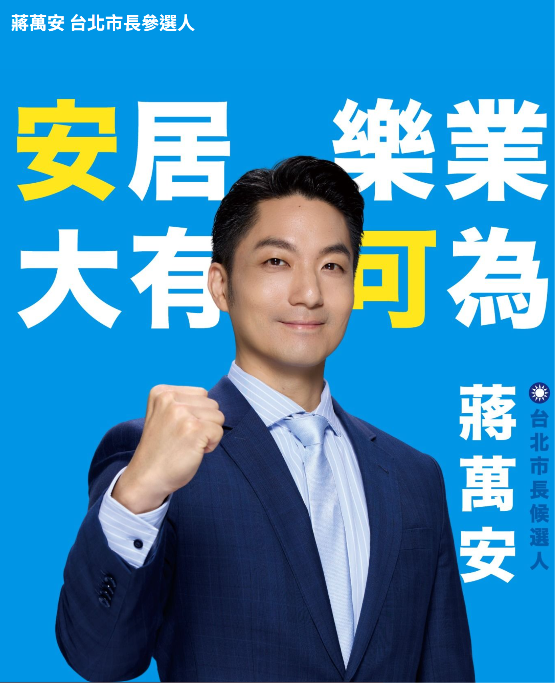
Chiang Wan-an campaign poster. Photo: Chiang campaign office.

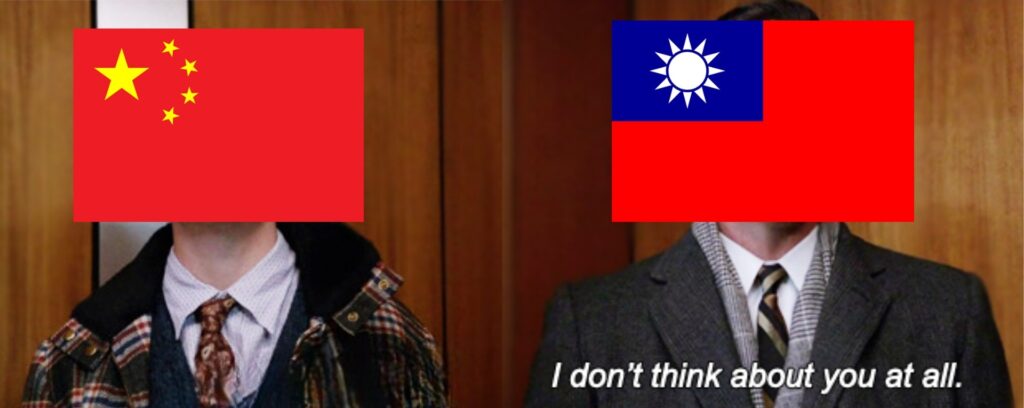
Taiwanese views on relations with China fit into a similar paradigm. It matters, but it doesn’t occupy their daily thoughts unless reminded. Local candidates have largely been smart enough to not talk about China and instead focus on more relevant issues.

If Chiang Wan-an loses Taipei City, it won’t be because of his China policy, and ergo it shouldn’t be seen as a challenge to Beijing or its leader Xi Jinping (XJP). If you come across a headline in foreign media which says this Taiwan election is a rebuke to China, then I implore you to cancel your subscription.

Ideological Control

Yet a DPP win will help the ruling party control the ideological debate against a KMT that’s struggled on the national level to offer anything beyond “all the way with XJP.”

KMT Chair Cheng Li-wun doesn’t appear smart enough to understand this reality. Her cozy-up-to-China policy won her support within the party because its leadership is stacked with pro-China hardliners, but it has alienated most of Taiwan, including thousands of KMT voters.

Still, it appears to be the only policy Cheng has been able, or willing, to enunciate. In a briefing with the Taiwan Foreign Correspondents’ Club earlier this year, she waffled and dodged all manner of questions ranging from economics to semiconductor policy.
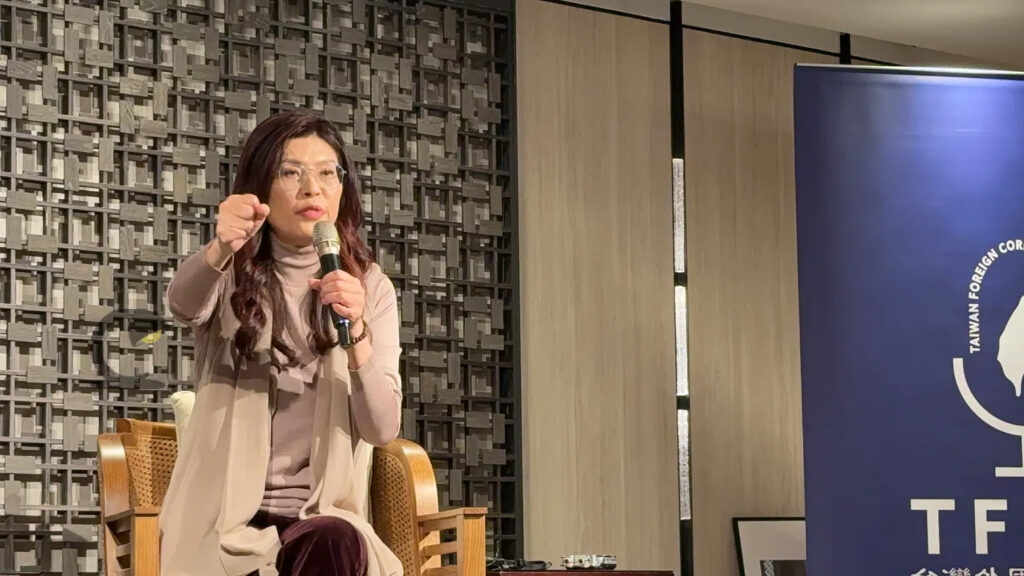
KMT Chair Cheng Li-wun speaks to the Taiwan Foreign Correspondents’ Club, 23 March 2026. Photo: Tim Culpan/Culpium

As a result of Cheng’s lack of policy depth in favor of stubbornly hewing to party ideology, some local KMT candidates have made the unusual decision of distancing themselves from the party Chair.

Like the GOP Losing Texas

It’s almost certain that Cheng will lose her Chairmanship should the KMT lose Taipei City because such a scenario would be akin to the GOP losing the Texas Governorship or Senate seat.

But her position is under threat even if Chiang holds on to Taipei City and the party loses other “safe” posts or simply loses ground across the more than 11,000 positions up for grabs. For example, the New Taipei City mayoralship which the KMT has held since 2005 has a very real chance of falling to the DPP.

If this happens, the ideological grasp which Cheng and her hardline supporters have over the KMT would weaken, ushering in a more conciliatory tone favored by younger party members. By this, I mean more readily embracing a Taiwan-first future for both the KMT and the nation, which would necessarily mean de-emphasising without fully abandoning its long-held China unification platform.

Beijing’s Finger on The Pulse

What this means for Xi Jinping and Beijing’s view of Taiwan, I can’t answer. Over the past 30 years, Taiwan has de-emphasized the unification vs. independence debate in favor of real meat-and-potatoes issues like economics, public welfare, and living standards. Yet it seems to me, from my seat in Taipei, the Chinese Communist Party has been unable to keep up with this changing tone.

For a while, during the Ma Ying-jeou era of 2008–2016, it looked like Beijing got it: the way to Taiwanese hearts was through their wallets, and offering the economic benefits of close ties to China was a somewhat winning strategy.

The Sunflower Movement of 2014, coupled with Beijing’s crackdown on Hong Kong’s Umbrella Movement, and then the harshness of COVID, have taught Taiwanese to distrust Beijing. From there, we’ve seen a continued disinformation campaign both overseas and domestically aimed at painting Taiwan’s economic future as bleak and its security future as hopeless.

I think this election will show that Taiwanese are not falling for it. They have real gripes, and electoral candidates across both sides of the political rainbow have stepped up to address those concerns. And as long as Taiwanese believe that their leaders are listening, acting, and improving, then I think the constant barrage of disinformation will be increasingly ignored. I wish I could say the same for foreign observers who still cling to Beijing’s view of Taiwan.

Xi Jinping Thought

An interesting question I’d love to have answered is how Xi Jinping may act once he realises that Taiwanese are largely ignoring him as they focus on local issues. And that, my new Sinocism friends, is a topic I’ll let you all discuss.

Meanwhile, if you want to keep tabs on Taiwan, its technology sector, industrial development, and the Jensen Huang firestorm, then you’re welcome to come visit me over at Culpium.
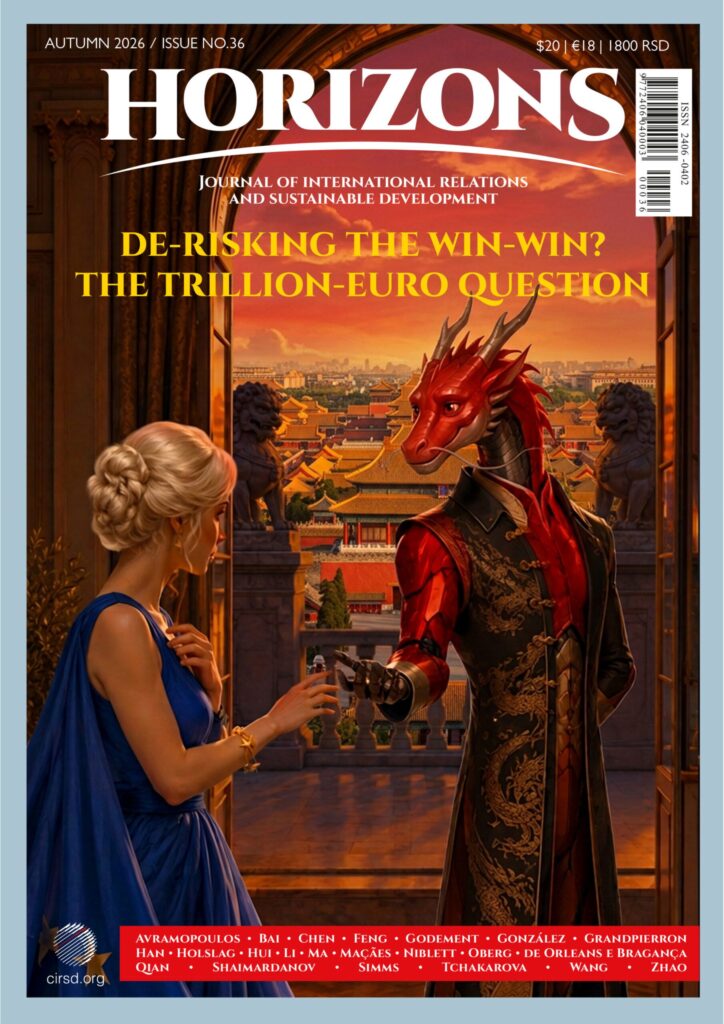
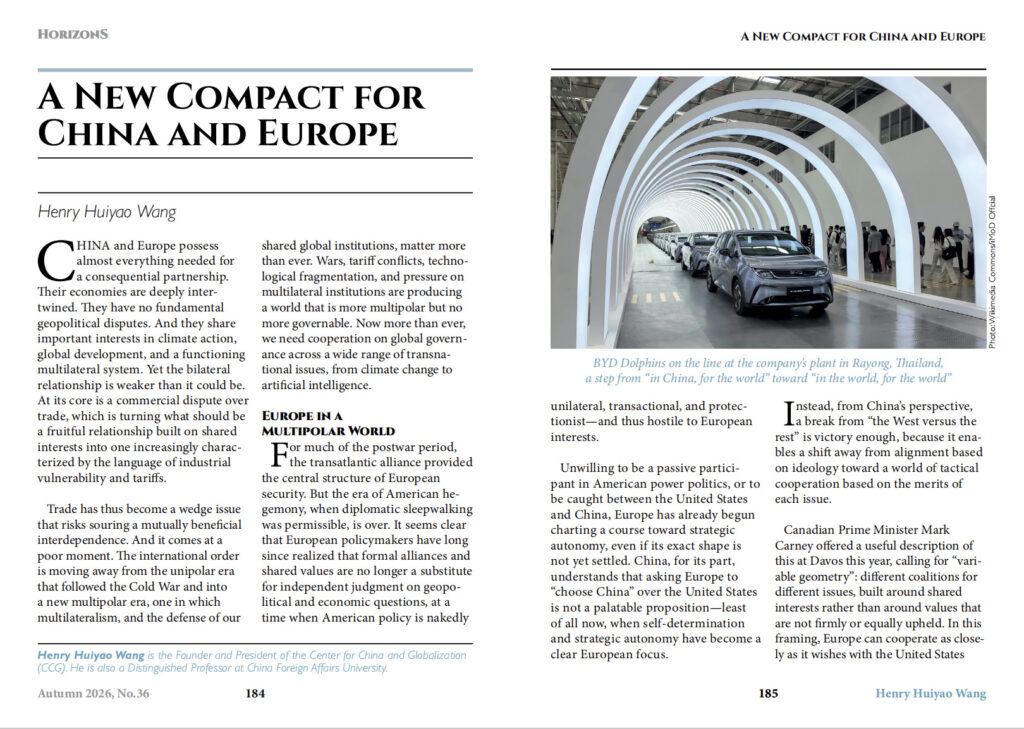
Henry Huiyao Wang: A New Compact for China and Europe

CCG President outlines opportunities for China and Europe to deepen cooperation in trade, investment, climate action, and global governance.

[from the Center for China & Globalization, 7 November 2026]

Henry Huiyao Wang [王辉耀], Founder and President of the Center for China & Globalization (CCG), has published an article titled “A New Compact for China and Europe” in the Autumn 2026 issue (No. 36) of Horizons, a journal published by the Center for International Relations and Sustainable Development (CIRSD).

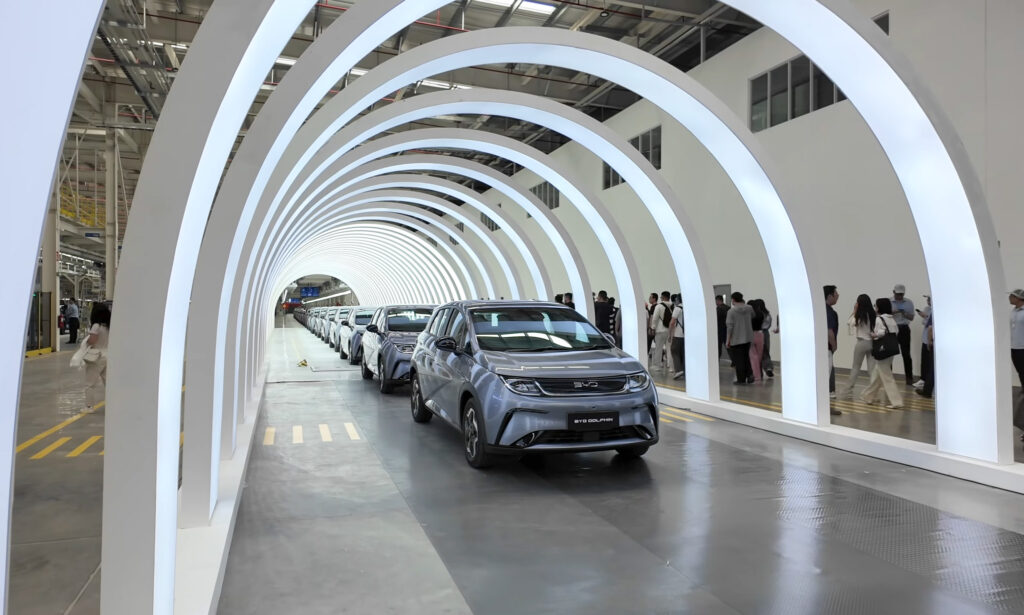
BYD Dolphins on the line at the company’s plant in Rayong, Thailand, a step from “in China, for the world” toward “in the world, for the world”
Wikimedia Commons/iMoD Official

China and Europe possess almost everything needed for a consequential partnership. Their economies are deeply intertwined. They have no fundamental geopolitical disputes. And they share important interests in climate action, global development, and a functioning multilateral system. Yet the bilateral relationship is weaker than it could be. At its core is a commercial dispute over trade, which is turning what should be a fruitful relationship built on shared interests into one increasingly characterized by the language of industrial vulnerability and tariffs.

Trade has thus become a wedge issue that risks souring a mutually beneficial interdependence. And it comes at a poor moment. The international order is moving away from the unipolar era that followed the Cold War and into a new multipolar era, one in which multilateralism, and the defense of our shared global institutions, matter more than ever. Wars, tariff conflicts, technological fragmentation, and pressure on multilateral institutions are producing a world that is more multipolar but no more governable. Now more than ever, we need cooperation on global governance across a wide range of transnational issues, from climate change to artificial intelligence.

Europe in a Multipolar World

For much of the postwar period, the transatlantic alliance provided the central structure of European security. But the era of American hegemony, when diplomatic sleepwalking was permissible, is over. It seems clear that European policymakers have long since realized that formal alliances and shared values are no longer a substitute for independent judgment on geopolitical and economic questions, at a time when American policy is nakedly unilateral, transactional, and protectionist—and thus hostile to European interests.

Unwilling to be a passive participant in American power politics, or to be caught between the United States and China, Europe has already begun charting a course toward strategic autonomy, even if its exact shape is not yet settled. China, for its part, understands that asking Europe to “choose China” over the United States is not a palatable proposition—least of all now, when self-determination and strategic autonomy have become a clear European focus.

Instead, from China’s perspective, a break from “the West versus the rest” is victory enough, because it enables a shift away from alignment based on ideology toward a world of tactical cooperation based on the merits of each issue.

Canadian Prime Minister Mark Carney offered a useful description of this at Davos this year, calling for “variable geometry”: different coalitions for different issues, built around shared interests rather than around values that are not firmly or equally upheld. In this framing, Europe can cooperate as closely as it wishes with the United States on defense, while still finding common cause with China on climate and trade reform, or with India on development. Such flexibility is increasingly the default in our plural world.

A cohesive Europe able to act independently is preferable to a divided continent whose China policy is increasingly shaped elsewhere. But that also means that policymakers in China must address European fears if they are to benefit from engagement and cooperation on shared interests.

The Changing Bargain

The core anxiety facing Europe, and the one undermining a merits-based relationship, is that the old, unspoken economic bargain—European technology and premium manufacturing in exchange for Chinese consumer goods and lower-cost production—is giving way to a more competitive relationship.

China now possesses broad industrial ecosystems, world-class infrastructure, skilled engineering talent, and the capacity for fast commercialization at scale. It no longer competes on wages alone. In electric vehicles, batteries, solar energy, machinery, telecommunications equipment, and, increasingly, advanced digital applications, Chinese firms can combine cost, speed, and technological capability.

But let us not get carried away with catastrophizing. The shared economic foundation between China and the EU remains immense. In 2025, two-way trade in goods and services exceeded €880 billion. Europe imported more than €570 billion in goods from China and exported about €200 billion, producing a large bilateral goods deficit. Yet this figure should be interpreted carefully. The European Union still recorded an overall goods surplus of approximately €128 billion in 2025, as well as a substantial current-account surplus. Nor are all imports finished products: Eurostat data shows that 57 percent of all extra-EU goods imports in 2025 were intermediate products, meaning that much of what Europe imports feeds into value-added production chains from which Europe itself benefits. Europe’s difficulty is that, while its industry remains broadly profitable, certain critical sectors are already under pressure, and the trend seems unlikely to reverse suddenly in favor of European manufacturing.

Europe is not facing this crisis in a vacuum, either. It is compounded by high energy costs, aging populations, fragmented capital markets, and chronic underinvestment. The result is a genuine fear of deindustrialization, with the attendant loss of skilled employment, supplier networks, technological capacity, and social cohesion. This worry is especially potent in the major European economies with large export-oriented manufacturing sectors, such as Germany, France, Italy, and Spain, and it makes the debate over “overcapacity” deeply politically charged.

While the imbalance is a product of industrial excellence, it can also be attributed to weak domestic demand in China. Household consumption there remains around 40 percent of GDP, while families save heavily out of concern over housing, education, health care, and retirement. The 2025 consumption action plan addressed wages, pensions, health care, childcare, paid leave, and benefits for migrant and flexible workers, and China’s first five-year plan devoted specifically to consumption subsequently set a goal of approximately 60 trillion yuan in retail sales by 2030. But it is far too early to call the effort complete. Although per capita disposable income rose by 5 percent and consumption expenditure by 4.4 percent in 2025, the first half of 2026 was weaker, and overall consumption still lags behind where it should be. Stronger pensions, health care, unemployment insurance, childcare, and portable benefits for migrant workers will help reduce precautionary saving, and greater access for foreign goods and services would ensure that stronger Chinese demand creates opportunities for European producers. That transformation, however, is not yet complete.

Europe, for its part, should recognize that competitive success is not in itself an unfair subsidy. The International Energy Agency estimates that producing a battery-electric vehicle costs more than 30 percent less in China than in advanced economies, with only about one-third of the gap attributable to the battery; a similar cost gap exists for conventional vehicles. China’s earlier industrial policies undoubtedly helped establish this ecosystem, but important forms of direct support, including national EV purchase subsidies, have already been phased out.

Rhodium Group estimates that BYD enjoys a cost advantage of approximately $4,700 per vehicle over Tesla’s operations in China, of which grants account for only about $292, while vertical integration and lower research, administrative, and supplier costs explain at least three-quarters of the difference. BYD produces roughly 70 percent of its components in-house, including its batteries. Europe should investigate market-distorting support and is right to insist on transparency, but it should not define the ecosystem, technology, and efficiencies China has built as unfair.

Nor is China’s automobile sector insulated from competition. The number of Chinese electric-vehicle makers was reported at 487 in 2018; by 2025, consolidation had reduced the market to approximately 129 brands produced by about 50 manufacturers, and only 10 to 15 are expected to be profitable by 2030. China exported approximately 5.86 million of the more than 31 million vehicles it sold in 2024, meaning that the large majority were still absorbed at home. By comparison, Volkswagen delivered 9.03 million vehicles worldwide but only 1.12 million in Germany, while Toyota and Lexus sold 10.16 million worldwide and 1.44 million in Japan. Airbus, likewise, sells approximately 68 percent of its aircraft outside Europe. Producing for global markets is accepted as normal when established European or Japanese companies do it; it should not automatically become illegitimate when Chinese firms do the same.

China’s textile industry offers a further precedent. Even as wages rose and some production moved to Vietnam, Bangladesh, and elsewhere, China retained 37 percent of global textile exports and 34 percent of clothing exports in 2017, because supplier clusters, infrastructure, skills, and continual upgrading proved more durable than low labor costs alone.

Beyond economic competition, clearer rules are urgently needed on the securitization of critical industries. The dispute over Nexperia—the Chinese-owned semiconductor company placed under Dutch government control in 2025—rattled supply chains and deepened concern in China about investing abroad. Either the company should not have been sold in the first place, or a clearer regulatory environment might have avoided a quasi-nationalization that rapidly internationalized a corporate dispute, and that still hangs over the mutual investment relationship today.

Likewise, proposals for a European instrument modeled on the United States’ Section 301 powers may offer political reassurance, but Section 301 is a blunt unilateral instrument designed to authorize retaliation. Europe would be better served by an explicitly transitional mechanism. Where an import surge threatens to destabilize domestic markets, temporary safeguards can provide time for adjustment, but they should be evidence-based, reviewable, and subject to firm sunset clauses. Their purpose should be to facilitate adaptation and negotiation, not to turn emergency protection into a permanent wall.

An Industrial Compact for Shared Competitiveness

When I visited Jean Monnet’s house outside Paris this summer, I was reminded of the method that helped build modern Europe: begin with concrete achievements that create the basis for solidarity. That method matters especially now, when trade has become a wedge issue and trust and trade cannot be separated.

We must therefore build a new industrial compact: one that aligns Chinese industrial capacity with Europe’s need for investment, innovation, and employment, and that enables China and Europe to stand together in support of a world of free, fair, and open trade.

First, China should follow through on its ongoing shift from an export– and investment-heavy model toward consumption-led growth. Alongside the social measures described above, this requires reducing the barriers faced by private and foreign businesses, improving market access in services and public procurement, and applying regulation more transparently. European companies should be able to compete in China with confidence that they will receive equal treatment and can protect their intellectual property.

Second, Europe needs to draw a sharper distinction between trade in products that present a genuine security risk and investment that strengthens European productive capacity. Concerns about supply-chain resilience and security in defined strategic sectors are unavoidable, given increasing regionalization. But a presumption against Chinese investment would deprive Europe of capital, technology, competition, and jobs precisely when it needs them most. Instead, Europe could openly welcome investment that meets its requirements on governance, data protection, labor standards, and environmental performance, while increasing the local economic contribution such production provides.

This openness should be anchored by a renewed Comprehensive Agreement on Investment. The agreement reached in principle in 2020 was never implemented and the relationship has changed too much for it simply to be revived unchanged. China and Europe should instead negotiate a new CAI covering market access, national treatment, subsidy transparency, technology transfer, public procurement, and enforceable dispute resolution. It should give European companies more predictable access to China, while establishing clear and consistent conditions for Chinese market access and investment in Europe, with an eye to creating employment and supplier networks there.

China has already demonstrated the value it places on market access by extending tariff-free treatment to goods from 53 African countries, and it could move explicitly to align its standards more closely with Europe’s. Europe, for its part, should reconsider its technology and investment restrictions—especially those implemented specifically to protect U.S. interests, such as the restrictions preventing China from purchasing advanced semiconductor equipment from ASML. Working examples of Chinese investment in Europe already exist. Chinese companies are investing in battery and vehicle production in Hungary, Slovakia, Spain, and Serbia, while European manufacturers—including Volkswagen, BMW, and Mercedes-Benz—continue to deepen their research, production, and partnership networks in China. These investments should not be viewed as isolated commercial transactions. They can become the architecture of a more balanced relationship.

Third, localization must mean more than final assembly. Joint ventures and investment agreements can encourage local supplier development, worker training, research partnerships, and the sharing of production know-how, while respecting intellectual-property rights. Chinese industry was once buoyed by European know-how through joint ventures; in return, European industry can now benefit from Chinese advances. The goal should be a competitive ecosystem in which both Chinese and European firms have a stake.

Fourth, any trade measures should be targeted and temporary. If an import surge threatens serious injury, safeguards can buy time for adaptation. But they should have clear evidentiary thresholds, sunset clauses, and review procedures. Protection without a productivity strategy merely postpones decline and risks marginalization, rather than allowing a dynamic industrial sector to emerge. At the same time, Europe can and should complete its own agenda: lowering energy costs, deepening the single market, mobilizing investment, scaling up innovative companies, and improving infrastructure.

Here, China can become Europe’s “fitness partner.” The phrase may sound counterintuitive at a moment of industrial anxiety, but the underlying idea is important. Healthy competition from China can push European companies and governments to confront long-delayed reforms, reduce costs, and innovate faster. Shelter from competitive pressure does not create health; competition, by contrast, can serve as a yardstick for rebuilding strength. China, meanwhile, gains more from a prosperous and capable Europe than from a weakened market increasingly hostile to Chinese commerce.

Finally, the compact should look beyond the bilateral market. Chinese and European joint ventures could look abroad, toward the product and development needs of the Global South. Joint production for Global South markets could be a starting point, moving in time toward joint financing of development and infrastructure to accelerate green industrialization in Africa, Asia, Latin America, and the Middle East.

This would represent the next stage of globalization: not simply Chinese companies “in China, for the world,” but “in the world, for the world.” It would spread productive capacity more widely, answer concerns about concentrated supply chains, and make development a shared undertaking rather than an arena for geopolitical competition.

From Commercial Trust to Strategic Cooperation

An industrial compact cannot by itself remove all political differences. But it would serve as a springboard, and a trust-building exercise, for deeper commitments and further work on shared interests.

Climate cooperation is the most obvious bridge. China’s manufacturing scale has lowered the global cost of solar panels, batteries, and electric vehicles, in a very real way underwriting the transition away from fossil fuels. At the same time, Europe is suffering under the weight of an energy crisis born of Russia’s invasion of Ukraine and, more recently, of upheavals in the Middle East around the Strait of Hormuz and the Bab al-Mandeb. A natural alignment would be for China and Europe to build a green partnership that helps wean the world off volatile fossil fuels and address the climate crisis. The exact shape of such measures is not yet defined, but using joint ventures, cooperation, and technology exchange to tap Chinese expertise and cost advantages could benefit both sides while buoying the global green transition. A tariff spiral in clean technology, by contrast, would make the energy transition slower and more expensive for everyone.

More broadly, China and Europe share an interest in conflict resolution. China has always been clear that sovereignty and territorial integrity apply universally, that nuclear escalation is unacceptable, and that a negotiated settlement must provide credible security for all parties. But it can do more to ease the concerns of a Europe that feels threatened by a Russia now in its fifth year of fighting in Ukraine. Working together, Europe and China could help provide an off-ramp, each using its leverage to bring the negotiating positions closer together. A truly durable settlement, acceptable to both sides, may eventually require security guarantees involving both European and non-European countries, and China could contribute through reconstruction, nuclear safety, and peacekeeping. The Middle East is another region where common interests are greater than current policy coordination suggests. Continued conflict and volatility around the straits have not only given fresh impetus to the transition away from fossil fuels but also created a new area of shared interest. Together, Europe and China could support a peace architecture with wider international participation.

Artificial intelligence governance is another opportunity. China and Europe approach data, platforms, and regulation differently, but both reject a future in which a handful of private companies set global rules without public accountability. They can work together on safety testing, scientific exchange, interoperable standards, and the application of AI to health, climate, and development. Agreement will be difficult, but building a shared environment for rule-making would help hedge against fragmentation in this rapidly developing field.

Finally, China and the EU have both long advocated restoring the World Trade Organization. A revitalized WTO already contains tools to address subsidies and demonstrable injury. Boeing and Airbus were both found, in WTO disputes, to have benefited from improper support, and those cases were handled through multilateral proceedings rather than through an open-ended campaign against either side’s wider industrial success. The WTO’s dispute-settlement system must now be restored, its rules on subsidies and state enterprises updated, and its development functions strengthened. The United States weakened that system by blocking appointments to the Appellate Body after adverse rulings; but China and Europe are both major beneficiaries of an open trading system, and both can press for reform.

None of this will be sustainable without renewed contact between societies. Direct flights, student exchanges, tourism, university partnerships, city-to-city links, and think-tank dialogue all have their roles to play, for they are the infrastructure of mutual understanding.

China–Europe relations will not always be perfectly aligned, and they will likely continue to contain elements of cooperation, competition, and disagreement. But together, we can put to rest the prospect of weaponized interdependence and move instead toward win-win interdependence.

Europe does not need to become less European in order to cooperate with China, nor does China need to adopt European political mores for cooperation to succeed. Both are now free to cooperate selectively and on the merits of each issue. And a world in which China and Europe cannot find areas of deep mutual interest—despite their deep economic ties and their shared stake in multilateralism—is a world that is measurably poorer for it.

Henry Huiyao Wang: A Xi-Trump-Putin summit in Shenzhen could kick-start peace in Ukraine

CCG’s President says there will be no diplomatic masterstroke in Ukraine’s absence, but serious consideration of a ceasefire can lay the groundwork for peace

[from the Center for China & Globalization, 31 October 2026]

Below is the latest opinion column by Henry Huiyao Wang [王辉耀], founder and President, Center for China and Globalization, published in the South China Morning Post.

At the recent Valdai Discussion Club, I asked Russian President Vladimir Putin if he would be open to meeting Chinese President Xi Jinping and U.S. President Donald Trump at the Asia-Pacific Economic Cooperation (APEC) forum in Shenzhen. I also asked, more broadly, what role China could play in promoting peace in Ukraine, mediating and contributing to peacekeeping.

Putin was receptive, warmly welcoming the idea of a China-hosted meeting. Trump, too, has expressed a willingness to meet Xi and Putin. These expressions of openness offer an opportunity we must seize in pursuit of peace.

Some in the United States and Europe question the value of such a summit. They may fear restoring Putin’s standing or normalising the conflict without yielding any real progress towards an end to the war. That risk is still real but these largely Western fears must be tempered by the very real, very human cost of letting the war continue unabated.

From the very beginning of the war, I have been arguing that China has a constructive role to play. In March 2022, less than three weeks into Russia’s invasion, I wrote an article in The New York Times titled “It’s Time to Offer Russia an Offramp. China Can Help With That.”

In August last year, I extended that train of logic in Foreign Policy, where I proposed a seven-party format for peace negotiations and suggested that a peacekeeping force include troops from European and BRICS countries. A meeting of the three leaders in Shenzhen could help lay the groundwork for these broader diplomatic and peacekeeping efforts.

Without Ukraine’s participation, such a meeting is unlikely to produce a diplomatic masterstroke that ends the war. But the three leaders need not put the war to rest at a table in Shenzhen to make progress. Serious consideration of a ceasefire along the current line of contact—an approach Ukrainian President Volodymyr Zelenskyy has supported—could give peace efforts fresh momentum, leaving the final status of disputed territories for subsequent negotiations.

Further agreement could be sought on the protection of nuclear facilities, or a mutual end to strikes on energy infrastructure, new prisoner exchanges or improved humanitarian access. Of course, issues of sovereignty, security guarantees, Russia’s security concerns and Europe’s security commitments would remain. But these need not all be resolved at once before a ceasefire can begin.

Already, years of war have inflicted immense suffering on both Russia and Ukraine. Neither side achieved its objectives, and both need a dignified way out that protects their core interests. Thus, we must open a path towards peace without requiring either side to concede defeat. China could help bridge this gap by bringing Xi, Trump and Putin together in Shenzhen to explore how a ceasefire and wider negotiations involving Ukraine might work.

The United Nations could stand at the core of such an arrangement by monitoring any ceasefire and preventing a return to fighting by physical peacekeeping if the parties are so inclined.

For a broader negotiation on settlement, I find myself returning to a seven-party format that would bring together the five permanent members of the UN Security Council—China, France, Russia, Britain and the U.S.—alongside Ukraine and the European Union. An understanding reached in Shenzhen could give momentum to this broader negotiating process and free up the Security Council for action.

A peacekeeping force composed entirely of NATO or European troops might be unacceptable to Russia. Yet a mission without European participation would struggle to reassure Ukraine and its neighbours. Any workable arrangement would need to address both concerns.

In my Foreign Policy article, I proposed a peacekeeping force drawing troops from five European countries—Germany, France, Britain, Poland and Italy—and five members of the BRICS grouping, such as China, India and Brazil. And while the exact formulation, from the composition and mandate to the terms of deployment, would need to be negotiated with the consent of Russia and Ukraine, and the agreement of the contributing countries, the core idea remains sound.

As a permanent member of the UN Security Council and the largest contributor of peacekeeping personnel among the five permanent members, China is well positioned to help. Its distinctive role in the global economy and dialogue with Russia, Ukraine, the U.S. and Europe, give it channels through which to coax the parties towards peace. But this process must begin somewhere, and that somewhere could be Shenzhen.

Nor should APEC be the end of the diplomatic effort. With an understanding reached by the leaders in Shenzhen, the Security Council may pick up the momentum by advancing ceasefire and peacekeeping proposals. The Group of 20 could then join the effort to rally support from major economies with an interest in maintaining the deal. Each would play a different role and would not be tasked with settling the entire conflict.

China’s role in the Saudi Arabia-Iran rapprochement in 2023 showed Beijing’s ability to open a door after years of enmity. The Ukraine war is different, and there can be no guarantee of a similar outcome. But diplomacy must begin somewhere, particularly when fighting has brought such destruction.

The central question is whether such a meeting could help bring the war to an end. In that light, any gain in prestige for an individual leader is almost irrelevant. And if the three leaders could agree on practical steps towards peace, they would give the United Nations and the wider international community a material basis upon which peace could be built.