Charting a Course on Immune Response

[from LLNL’s Science & Technology Review, by Sheridan Hyland]
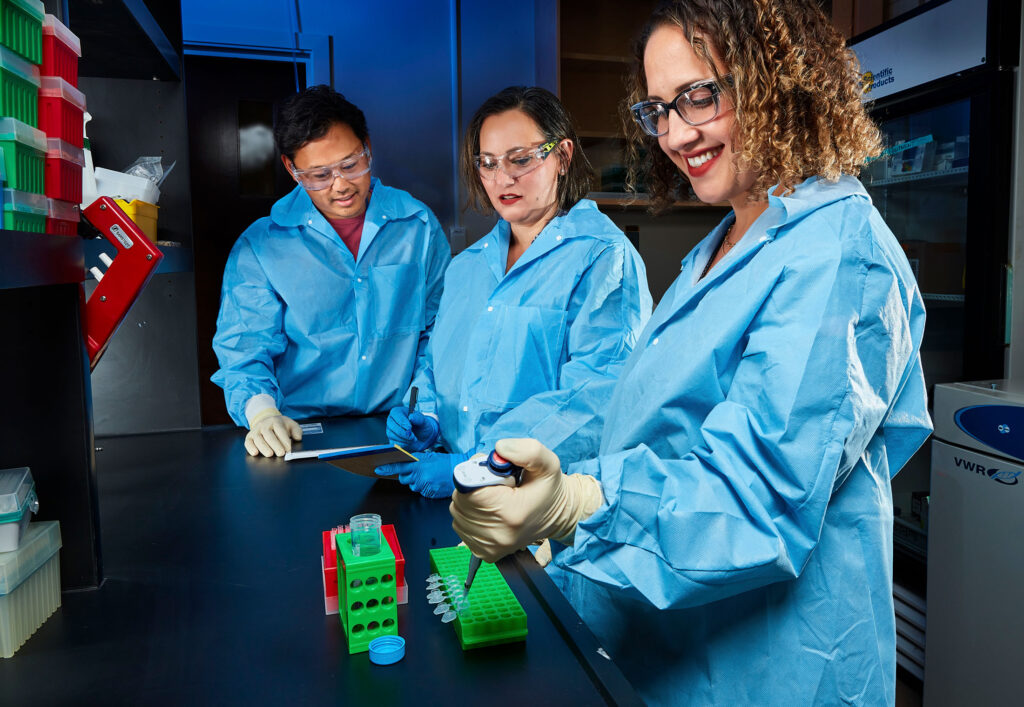
Lawrence Livermore scientists Dina Weilhammer (right), Feliza Bourguet (middle), and Nicholas Hum (left) prep samples for analysis to study Rift Valley fever virus behavior and immune response.

Respiratory diseases can balloon from a few cases to epidemics or pandemics, making them a consideration in national security planning and preparation. Understanding how a pathogen behaves in different circumstances and environments is complex and depends upon many factors, including genetics. COVID-19 remains a stark example of how understanding of pathogen behavior can be tenuous. Scientists continue to grapple with answering questions of why some carriers are asymptomatic while others produce symptoms of the disease, why some of the infected suffer the effects of long COVID while others do not, and why some individuals passed away and others survived. COVID-19 is only one example of a pathogen that raises questions among medical researchers: Valley Fever, variations of encephalitis, and other diseases also present additional challenges. 

Lawrence Livermore scientists are taking a comprehensive approach to understanding pathogen behavior and immune system response, building on past research that focused on individual molecules and interactions. Dina Weilhammer, a staff scientist in Livermore’s Biosciences Division, explains, “We’ve made significant inroads in understanding how the immune system recognizes foreign agents such as bacteria and viruses, as well as how the immune system can separate what should be eliminated and what should be protected. Today’s biotechnology tools can overcome earlier limitations. They enable us to interrogate the immune system more holistically than ever before to address questions and uncover unexpected considerations and answers.”

Through its research, the Livermore team—which includes Weilhammer, Nicholas Hum, Aimy Sebastian, Oscar Davalos, Margarita Rangel, Deepa Murugesh, Bria Gorman, Gregory Lum, Nicole Leon, Patrick Hurley, and Ashlee Phillips—is sharpening its understanding of the differences between one immune system that clears infection compared to another that cannot. Using a combination of controlled pathogen exposure; single-cell RNA sequencing (scRNA-seq); spatial transcriptomics to collect data; and computational platforms to organize, analyze, and interpret the data, the Laboratory is developing an immune system atlas that could help the medical field better understand and predict disease outcomes in the future.
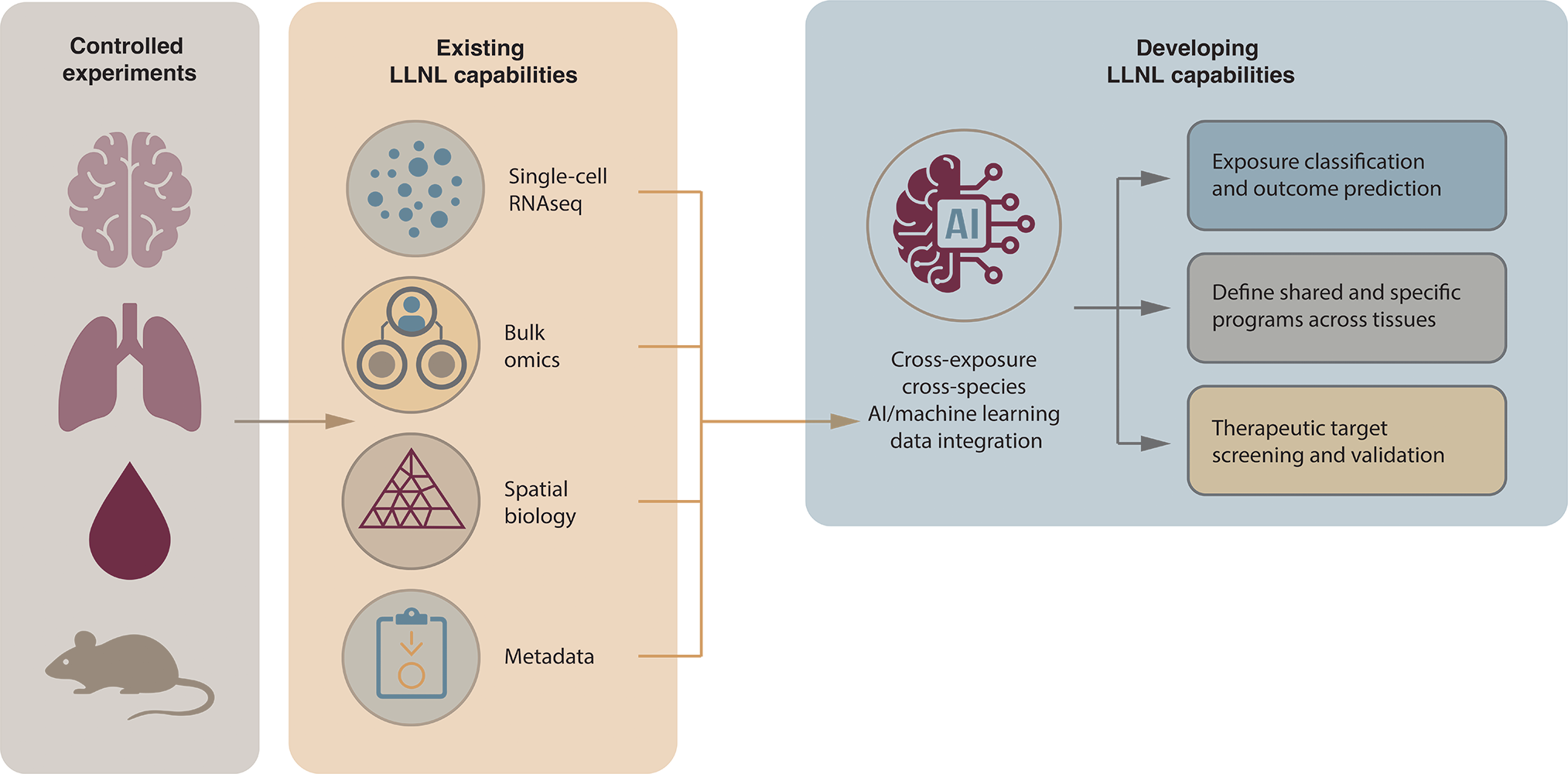
Livermore’s biologists combine multiple tools and research methods— controlled pathogen exposure, single-cell RNA sequencing, spatial transcriptomics, and AI integration of data—to understand how different pathogens that impact the lungs, brain, and blood behave in different environments and how an individual’s immune system responds. As studies progress, the data could be used to predict disease outcomes in individuals and offer therapeutic screening, validation, and treatment options.

Mapping the Methodology

To address their research questions, scientists developing the immune atlas have focused on pathogens that impact the lungs and brain. “We have viral, fungal, and bacterial models of disease that specifically target the lungs,” says Hum, a staff scientist. “At the same time, many diseases do not start in the lungs but can still affect them over time through systemic immune and inflammatory responses. The next natural question is how signals from elsewhere in the body reshape the lung environment and influence lung function.” Data from multiple techniques combine to provide a fuller picture of immune system response.
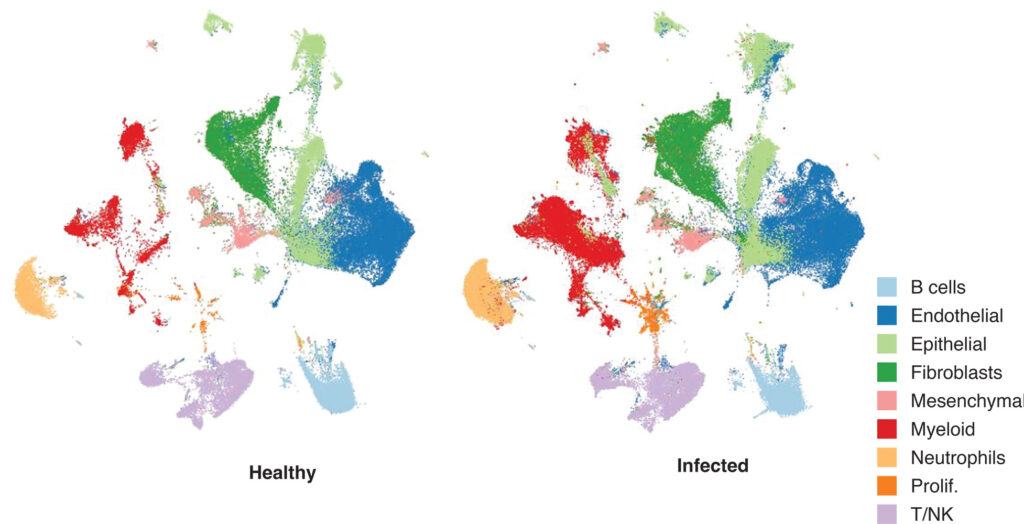
Using uniform manifold approximation and projection (UMAP), Livermore biologists can create a visualization of cell clusters in experimental groups. Pictured here, a variety of cells in mice have been identified in a healthy (left) and infected (right) lung, including epithelial cells in the airways; endothelial cells in the blood vessels; fibroblasts that provide structural integrity and tissue remodeling; and immune cells (lymphoid and myeloid), which identify defense and inflammatory response. Myeloid cells demonstrate the largest difference observed between healthy and infected cell tissue.

Experiments in which mice are exposed to a known pathogen under managed conditions (controlled pathogen exposure), enable researchers to study the development of an infection and the immune system response. By controlling the exact strain of the pathogen, the dosage levels, routes of exposure, timing, host factors, and environment, the team can establish potential cause and effect related to the immune system’s immediate response after infection, which cell populations respond first, how the disease progresses, and what leads to recovery or more severe illness. Another tool, scRNA-seq, measures gene expression in individual cells rather than averaging signals across an entire tissue sample, enabling researchers to identify which cells are inflammatory compared to which cells are behaving normally. In traditional bulk RNA sequencing, RNA extracted from thousands or millions of cells is pooled together before sequencing, obscuring differences among rare or functionally distinct cell populations. In contrast, scRNA-seq preserves cell-specific transcriptional information, enabling researchers to resolve how immune and nonimmune cells respond uniquely to infection and injury. To perform the analysis, lung tissue is first dissociated into a suspension of individual cells. Using a microfluidic droplet platform, single cells are encapsulated together with gel beads carrying unique molecular barcodes. Inside each droplet, messenger RNA released from the lysed (ruptured or broken) lung cell is captured and reverse-transcribed into complementary DNA (cDNA). During this process, each transcript receives both a cell-specific barcode and a unique molecular identifier (UMI), allowing researchers to distinguish where RNA molecules originated while also correcting for amplification bias introduced during polymerase chain reaction (PCR) amplification.
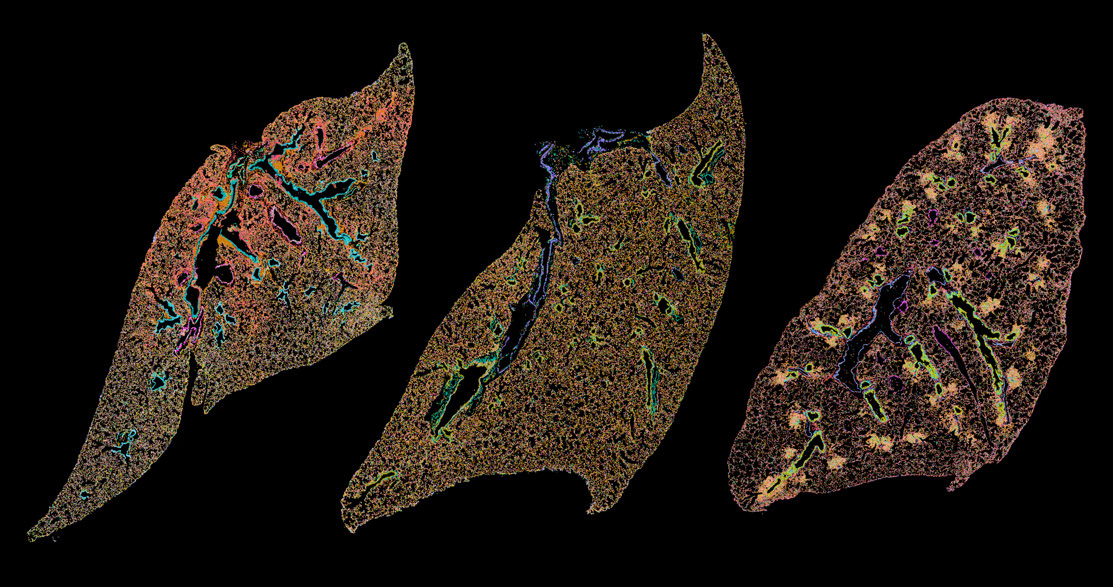
Livermore’s high-performance computing tools enable visualization of pathogens and immune response in tissue cells, as well as patterns of host responses across different disease states. The UMAP plot pictured here shows cell behavior across healthy and diseased conditions (from left to right: viral, bacterial, or fungal infection) in a mouse lung, based on single-cell RNA sequencing data from animal studies. Each dot represents a single cell, colored by its general cell-type identity. Spatial transcriptomic maps can also reveal the cellular neighborhoods that emerge during disease.

After barcoding and amplification, the team breaks the droplets and sequences the pooled cDNA libraries at high depth, generating hundreds of millions to billions of reads per experiment. Using computational pipelines to align the reads to the genome, Livermore’s scientists reconstruct transcriptomes for tens of thousands of individual cells simultaneously. The team uses graph-based clustering and dimensionality-reduction approaches such as uniform manifold approximation and projection (UMAP) to identify distinct cellular populations in infected and noninfected cells and visualize transcriptional relationships across experimental conditions.

A third method the team applies is spatial transcriptomics, which measures gene activity in specific locations in the tissue. Cells do not act in isolation from each other, and in the case of infection, cancer, or tissue repair, location in the tissue is important. For example, a macrophage near a blood vessel could behave differently from one next to a damaged epithelium (densely packed cells that cover external body surfaces such as skin, line internal cavities and organs, and form glands). In infection studies, spatial transcriptomics, a visual representation of the location and clusters of different cell populations, can show where inflammatory cells accumulate, where antiviral or antimicrobial genes are activated, how immune cells organize around lesions and infected areas, how responses differ between damaged tissue and nearby healthy tissue, and how cell neighborhoods change over time. In the lung specifically, spatial transcriptomics can reveal inflammatory cells clustered around infected airways, repair programs in surrounding tissue, and distinguish immune zones in severe compared to mild diseases.

Exploring New Ground

Livermore’s biologists have conducted several individual studies on Valley fever (Coccidioides posadasii), Rift Valley fever virus, Venezuelan equine encephalitis virus, influenza, respiratory syncytial virus, bacterial pneumonia (Streptococcus pneumoniae), and COVID-19. “Our work didn’t start with the intent to generate an immune atlas,” says Sebastian, a Livermore staff scientist. “We were working on individual projects and asking specific questions. However, as we started to generate more data, we began to discuss standardizing the process of how and when we collect data and putting it into one big data set.” The immune atlas combines the data gathered from cells’ immune responses to the different diseases and then uses computational software to build visualization tools that map the varying responses across infected and noninfected cells. 

Using scRNA-seq and spatial transcriptomics, the team sought to answer how the immune system responds inside an infected organ and why that response shifts from protective to damaging. “As we pulled together the data from millions of reads, we saw what cells were doing for tens of thousands of reads compared to other cells,” says Hum. “By putting the pictures together, we can tell the difference between a T cell and a normal epithelial cell, for example. And from this stage, once we have the resolution of what the cells are doing and how many there are, we can start comparing all the different time points, trajectories, and infection models.” Through several studies, the Livermore team found that severe disease is often driven not just by the pathogen itself but by specific immune programs that become harmful. The team’s methods helped identify which cells responded first (such as microglia in the brain and resident lung macrophages and stromal cells in the lungs), which cells entered later, where the cells went in the tissue, and whether they were helping or harming the individual.

To analyze this data and compare results across pathogens and different parts of the tissues being studied, Livermore’s team used a variety of computational tools. In each study, they collected data at multiple infection stages, looking for when changes occurred and when recovery signatures began to appear. Since every experiment was slightly different, the team integrated and visualized the data sets such that they could be superimposed over each other and compared. “As we quantify what cells enter and at what point in time, we can study how their profiles change,” says Sebastian. “For example, in a blood system, monocytes enter and differentiate into multiple subtypes. Some of these are highly correlated with better outcomes, while others are not. We want to identify what’s considered a good response compared to a bad response.” The comparisons indicated that the type of cells entering the lung in response to infection can influence the outcome.
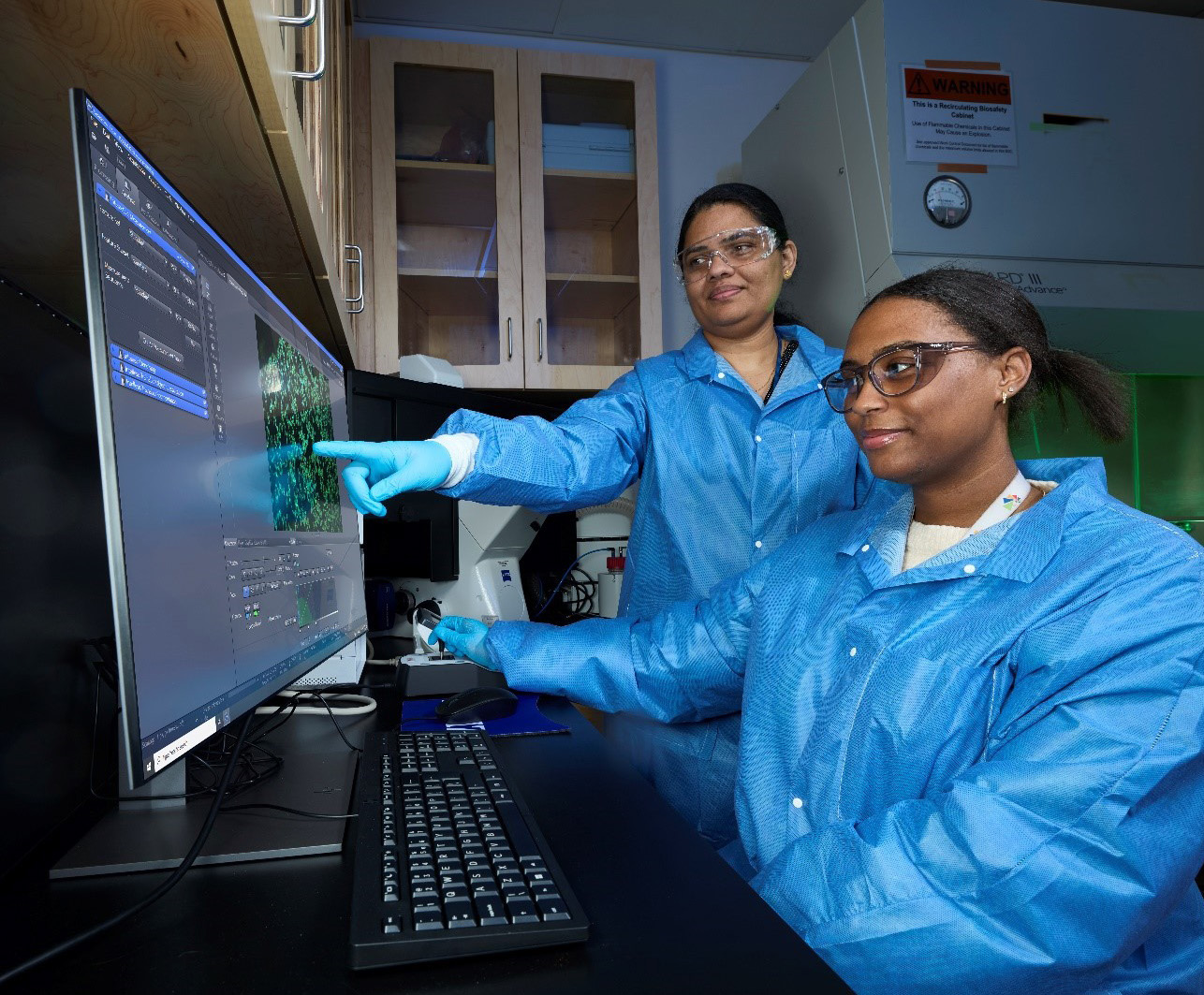
Team members Bria Gorman and Aimy Sebastian examine spatial transcriptomic data from a mouse lung.

A series of computational tools have helped parse and present the data, including both R– and Python-based approaches for scRNA-seq, spatial transcriptomics, and multi-omic integration analyses. For scRNA-seq analyses, the team uses Seurat in R and Scanpy in Python, while spatial transcriptomic analyses are performed using Seurat in R and Squidpy in Python. Additional tools such as Scenic, Slingshot, and CellChat are used to identify gene regulatory patterns, examine changes in cell states and differentiation, and explore how cells may communicate with one another. Graph-based clustering methods were applied to define cellular populations, and UMAP is used for dimensionality reduction and visualization of cellular and molecular patterns across experimental conditions.

While still in the early stages of research, the team is already seeing interesting, sometimes unexpected, results. One macrophage population repeatedly shows up in multiple infection models, particularly lethal infections. These macrophages express many extracellular matrix proteins and matrix-remodeling enzymes that are more commonly associated with cell types such as fibroblasts. “We don’t know exactly what they do yet, but we can clearly see a correlation between some lethal infections and macrophages coming in and moving toward this kind of profile,” says Sebastian.

Charting a New Course

As the Laboratory looks toward future research opportunities, a key focus is to understand what patterns and results in mice can translate to humans. Weilhammer says, “Comparing infections in which the test subjects recover from the disease versus succumb to it is useful. In our mouse models of COVID, we saw young animals recover from infections while aged animals did not. However, that’s not the whole story—we’re also interested in how the genetic background of the host can impact the trajectory of the disease.” In the COVID-19 pandemic, even though younger people suffered less severe illness compared to more elderly people, this outcome was not universally the case—many young people also had severe infections, difficult recoveries, and fatalities. “We think it’s highly likely that there’s a strong genetic component behind why some people do well following infection and others do not,” continues Weilhammer. 

In future studies, the team plans to integrate AI and deep learning models more significantly into their data analysis process and to help better predict an individual’s treatment needs and recovery path. “The basic research is difficult to pursue unless someone has all the experimental and computational capabilities that we have at Lawrence Livermore,” says Hum. “We’re still working toward the point where we can identify which illness someone has and how severe it might be from just a cough or other common symptom.”


[Archived PDF of article]

Japan-Watching: Still Dreaming: Kon Satoshi’s “Paprika” and Other Visions

by Miyamoto Yūko [宮本 裕子]

Anime (アニメ) director KON Satoshi (今 敏) died in 2010 at the age of 46, but his works remain highly influential. His final film Paprika, released 20 years ago, highlights his preoccupations with the divided self and the blurring of the lines between dreams and reality.

Dream Analysis

After starting out as a manga artist in 1985, KON Satoshi [今 敏] honed his skills in the anime production teams of OSHII Mamoru [押井 守] and ŌTOMO Katsuhiro [大友 克洋], and then made his feature-length direction debut with Perfect Blue, which was released in Japan in 1998. His fourth feature, the 2006 Paprika, is an adaptation of the novel of the same name by TSUTSUI Yasutaka [筒井 康隆]. Kon was public in his admiration of the book and he is said to have aimed to produce “something like the novel Paprika” in his previous anime. Indeed, Kon’s Paprika adaptation has many factors in common with his earlier works.

KON Satoshi [今 敏]

KON Satoshi [今 敏] in Venice in September 2006, when Paprika was showing in competition at the Venice International Film Festival. (© Reuters)

Tsutsui studied psychology at university, and motifs and ideas from Freudian and Jungian psychoanalysis feature regularly in his novels. Dream analysis plays a central role in the story in Paprika. In psychoanalysis, psychologically repressed material is thought to be banished to the unconscious before emerging in a different form in dreams. Analysis of dreams has been seen as a valuable way of resolving psychological problems by bringing the repressed matter into the open.

Paprika is set in a near-future Japan, where it is possible to monitor other people’s dreams on a screen. The main character is a therapist called Chiba Atsuko, who provides treatment via her alter ego Paprika, a dream detective. The technology is abused, however, forcing people to experience nightmares, and eventually these flood into the real world.

While Kon follows the broad outline of the original work, his adaptation incorporates numerous changes. The biggest of these is the chaotic parade of electronic goods, beckoning cats (“maneki-neko” [招き猫]), Buddhist statues, torii gates [鳥居], and other marching objects. This symbolizes nightmares spilling out of control, but there is nothing like it in Tsutsui’s book. Kon explained that the parade is made up of old-fashioned appliances and forgotten religious and traditional elements.

In Freud’s The Uncanny, he describes the titular subject as something familiar that has been estranged through repression. In the film, the members of the parade have become estranged from the conscious minds of people today, but are resurrected, and symbolize the uncanny nature of nightmares.

The parade that invades the dreams of patients. (© 2006 Madhouse/Sony Pictures Entertainment Japan, Inc.)

Integrating the Self

Alongside its Freudian elements, Kon’s Paprika shows Jungian influences. Carl Jung did not think that it was best to bring repressed aspects of the psyche under control, instead emphasizing the importance of integrating them into the self. This integration process can be seen in several of the characters.

While Konakawa, a character suffering from anxiety issues, searches through his dreams together with Paprika, he realizes that a mysterious person he repeatedly encounters is an old friend with whom he once shared the ambition of becoming a film director. This friend, who died of illness, appears in Konakawa’s dreams as his other self—the one who wanted to be a director. Konakawa overcomes his anxiety by recognizing and reconciliating with the repressed and forgotten self, represented by his old friend.

The division and antagonism between Chiba Atsuko and her alter ego Paprika are similar to those seen between Konakawa and his old friend. In the original book, Paprika was Chiba in disguise as a dream detective, but in Kon’s anime, they are like entirely different characters. In the finale, when dreams are flooding into the real world, they divide completely, existing at the same time in the same space. After this split, Chiba comes together again temporarily with the uninhibited Paprika when she no longer holds back her suppressed love for her colleague Tokita Kōsaku.

Chiba Atsuko with her divided self Paprika reflected in the glass. (© 2006 Madhouse/Sony Pictures Entertainment Japan, Inc.)

Chiba and Paprika do not divide in Tsutsui’s novel, and Konakawa’s old friend does not represent another self. This aspect of the divided self, added by Kon during the adaptation process, can be taken as a Jungian motif.

Books by the late KAWAI Hayao [河合 隼雄], renowned as a Jungian psychologist, were widely read in Japan from the 1980s until the 1990s, and Kon was among his readers. He is said to have become an avid reader of the psychologist for a time because he wanted to understand the music and lyrics of HIRASAWA Susumu (平沢 進), the former vocalist of the techno-pop band P-Model, who was influenced by Kawai. Hirasawa later created soundtracks for anime by Kon, including Paprika.

Kon also stated that he was influenced by the novels of MURAKAMI Haruki (村上 春樹), who himself developed a friendly relationship with Kawai through interviews and other encounters. Kon is said to have claimed that he was the only person who could adapt A Wild Sheep Chase [羊をめぐる冒険] and The Wind-Up Bird Chronicle [ねじまき鳥クロニクル] to anime.

Kon’s Themes

The anime Paprika could be seen as a later stage in the Kawai-led Jungian psychology boom in Japan, as well as a culmination of Kon’s characteristic themes. For example, the following aspects regularly appear in Kon’s work.

First, there is the depiction of another self. These include Chiba and Paprika in Paprika, Chiyoko and the old woman who appears at key moments and symbolizes Chiyoko’s future self in Millennium Actress (2002), and idol-turned-actress Mima and the apparition of her former pop star self in Perfect Blue.

Second, there are departures from heterosexual norms. In Paprika, the title character announces the wedding of Tokita and Chiba, which maintains the existence of this free-spirited “dream detective,” so that the film deviates subtly from the typical closed ending of heterosexual marriage. The ending of Millennium Actress suggests that Chiyoko’s long search for an artist she meets in her youth is her goal in itself, rather than a romantic relationship with him. In Tokyo Godfathers [東京ゴッドファーザーズ] (2003), alongside a caricatured depiction of a transgender character, we see the struggles of heterosexual couples and their families.

The third aspect is how media and technology blur the lines between reality and the unreal world. In Paprika, the DC Mini device erodes the boundary between reality and the dreams it is used to view, while Mima’s double in Perfect Blue appears in mirrors, PC monitors, and internet browsers. In Millennium Actress, Chiyoko’s acting roles are intertwined with her real life. In Kon’s anime series Paranoia Agent [妄想代理人] (2004), rumors transform into reality through the actions of the mass media and the characters, who in themselves are a kind of media commodity.

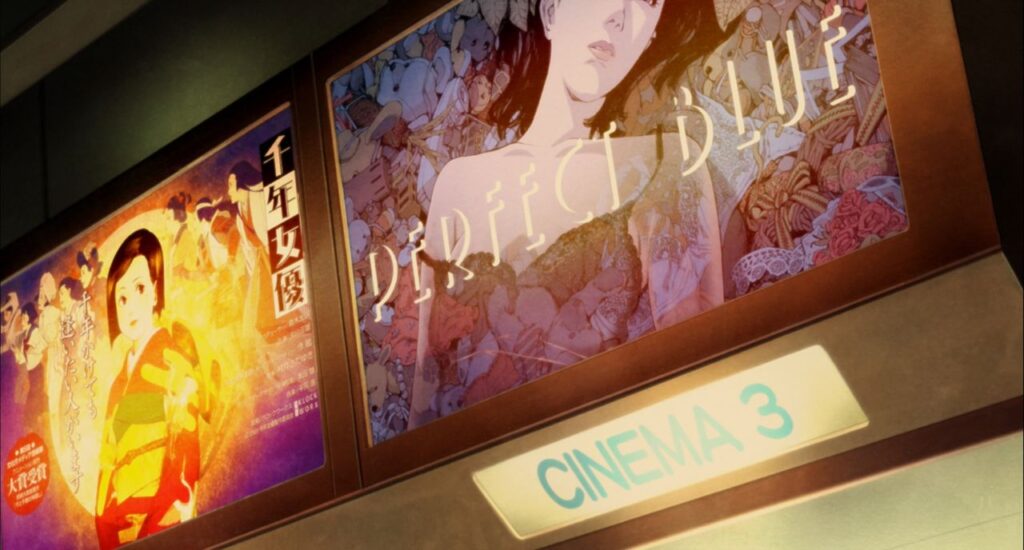
During a scene in Paprika when Konakawa goes to the movie theater, posters for Kon’s other films are on display. This shot shows Millennium Actress and Perfect Blue. (© 2006 Madhouse/Sony Pictures Entertainment Japan, Inc.)

Robot Adventure?

While there are clearly repeating themes in Kon’s works, Dreaming Machine [夢みる機械], which remains unfinished due to his sudden death from cancer, shows signs of an apparent major change of course. At one point it was announced that another director would complete the movie, but the producer later backtracked, saying that there was no director capable of realizing Kon’s vision.

Based on the remaining materials, this appeared set to be an action-adventure story about robots hunting down precious electricity in a near-future setting when humans are extinct. Paprika was also set in the near future, but Dreaming Machine features more overtly futuristic urban landscapes. The main characters are smaller, cartoonish robots, compared with the relatively tall humans of Kon’s other films. While it seems to have been aiming for a different kind of movie in terms of both content and visuals, was this really going to be a standard adventure story, without any twists?

Kon said that one of his influences was the manga [漫画] creator MOROHOSHI Daijirō (諸星 大二郎). In a short 1974 work by Morohoshi, also called “Dreaming Machine” (“Yume miru kikai [夢みる機械]”), robots go about their daily lives in the place of humans, who dream in a form of suspended animation. Kon’s unpublished 1984 manga Toriko covered similar ground. Can it be simple coincidence that his unfinished work has the same title as Morohoshi’s manga?

Beyond what looks on the surface like a robot action adventure, in Dreaming Machine,  Kon may have planned to depict a world of cryofrozen, dreaming humans. Or perhaps the robots were intended to be controlled consciously or subconsciously by humans. This is pure speculation, but I cannot help thinking that Kon may have intended to continue his theme of technology blurring the boundaries between dreams, or fantasy, and reality.

Some people may consider it unproductive to imagine what Kon’s works may have been, but this imaginative act helps carry his vision forward. Kon’s direct and indirect influence can be found in films like Darren Aronofsky’s Requiem for a Dream (2000) and Black Swan (2010), Christopher Nolan’s Inception (2010), and Edgar Wright’s Last Night in Soho (2021). While we will never see another KON Satoshi (今 敏) film, his vision lives on.

(Originally published in Japanese on July 10, 2026. Banner image from Paprika; © 2006 Madhouse/Sony Pictures Entertainment Japan, Inc.)

Education: Holding On to the Adventure Part of It

Education must hold on to learning-as-adventure or it goes stale.

Here’s a real example:

A man goes to his American Heritage Dictionary, to look up the word “vinaigrette” which he seems to remember as a salad dressing but finds there are as so often happens, other meanings.

The man’s eye looks down and comes across medicinal words close by like “vinblastine” and “vincristine” which have anti-tumor properties and are used in cancer medicine.

If you read the dictionary definitions receptively and thoughtfully you enter a world of tremendous complexity and interest (e.g., alkaloids, plant chemistry, phytochemistry, medicine, etc.). The Madagascar periwinkle plant is mentioned as a source for these alkaloids that become anti-neoplastic drugs. You wonder: why Madagascar? Why periwinkle plants? Why plants? These questions have “nontrivial” answers.

You also wonder about the nature of alkaloids and whether there are some evolutionary reasons why some plants produce food, some poisons (poison ivy, say), and others “good poisons” (i.e., alkaloids that can be made therapeutic through pharmacology).

You perhaps remember the PBS program of years ago about the black genius who did deep work in these and other “phytochemical” fields:

Percy Lavon Julian (April 11, 1899 – April 19, 1975) was a research chemist and a pioneer in the chemical synthesis of medicinal drugs from plants. He later started his own company to synthesize steroid intermediates from the wild Mexican yam. Julian received more than 130 chemical patents.

You can be dismissive and dismiss this “spontaneous questing” as a kind of woolgathering or “lolling about” mentally but the truth is often the opposite: it is only such “productive daydreams” that allow you to penetrate fields and topics and questions and problems by finding a “surprise window” or “backdoor” into them. Serendipity is very related to education, which has both formal or “do your homework” components to it and also a “wander about” one when you’re quite relaxed and mentally receptive.

Going from your “vinaigrette” definition quest, where you started, to wandering off into a deep look at vinblastine, vincristine, cancer, alkaloids and phytochemicals opens up “worlds” to you which is of course at the very basis of real education.