
[by Mirza Zulfiqur Rahman, Center for the Advanced Study of India]
In the plains of Assam, different kinds of rain are often distinguished through vivid local expressions that reflect their intensity and impact on everyday life. One such term is “sagoli-kheda-borokhun” (the rain that chases goats). It refers to a light shower, enough to send goats hurrying into their sheds while people continue with their daily activities. As the rainfall intensifies, it may be described as “goru-kheda-borokhun” (cow-chasing rain), followed by “manuh-kheda-borokhun” (people-chasing rain), when even humans seek shelter from the downpour. At the extreme end of this scale of vernacular expressions of rainfall intensity lies “gor-kheda-borokhun” (the rain that chases away rhinos), evoking a deluge so intense that even Assam’s iconic one-horned rhinoceroses would retreat and look for shelter. With rapid urbanization and changing rainfall patterns, such beautiful expressions of rain have lost continuous usage, especially among the younger generation, who no longer name types of rains.

These expressions reveal the richly textured ways in which communities inhabiting the water-abundant landscapes of Northeast India have understood and interpreted rainfall. Their environmental imagination is shaped not only by the rains themselves but also by the sounds, movements, and rhythms of the ecosystems around them. Among the most evocative signs of the approaching monsoon was the chorus of frogs inhabiting the “pukhuris” (ponds), “khaals” (natural drainage channels), and “beels” (wetlands). Their persistent croaking, described locally as the rhythmic “tur-tu-rai” of an assembled army of frogs, would fill the night air. Hearing this familiar symphony, people would often remark that the rains were on their way.
In today’s times, such soundscapes have diminished considerably and the traditional knowledge of being able to predict rains by observing sounds and signs in nature have not been passed on. The familiar chorus of frogs on humid nights has grown noticeably quieter as ponds have deteriorated, wetlands have been drained, and traditional water bodies have gradually disappeared from the landscape. Here, I look at the languages and imaginations of communities, and how these interact with the annual rains and storms along the Eastern Himalayas, how they keep record of the changes in the climate patterns in their community lives through their vernacular depictions of storms and rains, and how the current climate crisis has clouded their traditional communication methods.
Water-Abundant Worlds
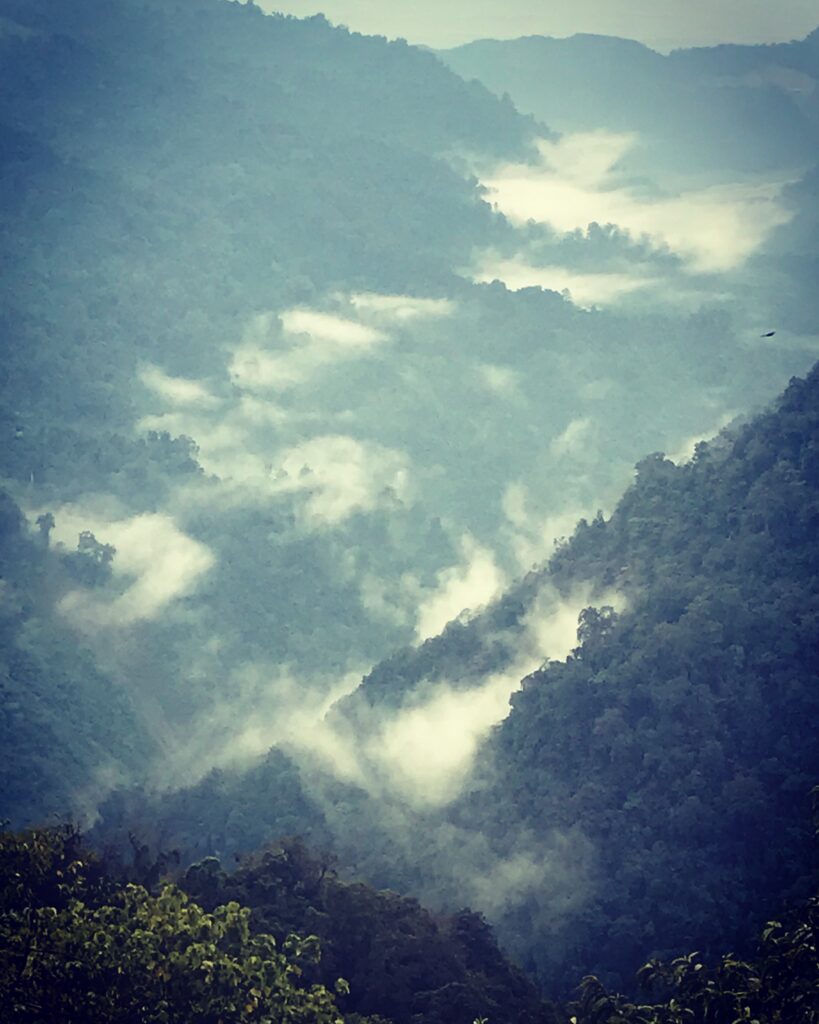
The Himalayan river-systems and the plains they nourish have always been regarded as a water-abundant environment, with monsoons, storms and rains forming an essential part of the lives and imaginations of communities living there. Nation-state borders, which straddle river-systems and regions across the Himalayas, bring in an additional layer of complexity to the various discourses of climate change disasters and patterns in the region, which are already exacerbated by infrastructural interventions on the river systems.
The languages and imaginations of Himalayan communities through which they describe the monsoons, climate change, storms, and rainfall patterns in their daily lives and natural environment, and how they are shaped by the interventions and narratives deployed by the nation-state in the Eastern Himalayas serve as critical crisis communication, often proving more useful and timely than government communication. The monsoon rains that stream in from the Indian Ocean currents and extend up to the heights of the easternmost fringes of the Himalayas bring most of the Himalayan river-systems to life. The monsoon clouds, after they enter Northeast India, play a veritable ping-pong between the low-lying rolling hills of the Patkai ranges and the towering eastern Himalayan mountain ranges, and the rains and storms that ensue from this match nourish the various communities, sustain the forests, and shape the landscape. This interaction forms an archive of climate disasters in the region.

Modern meteorological forecasting methods have greatly improved with scientific progress and modelling and availability of long-term data. However, from my research, it has been evident that the medium-range and long-range predictions of storms and rainfall patterns have low reliability at the local level, meaning state-led communication methods are not effective or timely. There are externalities of data collection challenges and reliability of what actually constitutes long-term data and the rapid infrastructure push and anthropogenic changes in the context of the fragile and ever-crumbling-and-forming Eastern Himalayas.

Bordoisila is the personified name given to an annual spring storm that ravages the foothills of the Eastern Himalayas, often spanning across Assam, Meghalaya, Arunachal Pradesh, Nagaland, and Bhutan. The community memory of Bordoisila is archived over time through stories of the storm returning to “her maternal home,” Assam, to celebrate Bohag Bihu, the mid-April spring festival, and accounting for the ferocity and devastation it regularly brings along, as well as the variation in timing of the storm’s arrival and when “she returns” after celebrating. Communities provide token offerings of festive food and clothing to Bordoisila, imploring the storm to pass by gently in “her path.” The variation in timing and ferocity of the storm is recorded in recent community memory as the personified storm managing to come home early this year as “she got to leave early from her workplace.” Originating in the Chotanagpur plateau and gathering force from the Bay of Bengal, she again returns in an angry mood as if “she was not treated well by her mother” with festive goodies and good food.

Personified Storms
Over years of research in the region, I have noted that communities rarely rely on modern meteorological forecasting information for the stormy season. They know it only by community memory and their sense of the ferocity of the storm when it passes by—among a series of spring storms—and declare that “she has finally arrived” and “she will soon return after celebrating Bihu.” It is along the trail of Bordoisila that the first wave of floods also arrives in Assam, and the traditional knowledge repository known as “Dakor Boson,” a collection of vernacular prose and poetry sayings, depicting how the coming monsoon and the ensuing agricultural cropping cycle will span out. The first floods were always celebrated with the Bihu dance, and the storm Bordoisila is revered despite its ferocity, as it brings the rain and nutrient-rich silt to nourish the overall landscape. However, with climate change and anthropogenic interventions, the language of climate crises has changed from a sense of celebration and reverence to utter despair.
Over the past several decades, Northeast India has witnessed profound shifts in its monsoon patterns. Periods of unusually intense rainfall have triggered devastating floods, while prolonged dry spells have brought drought-like conditions to many areas. In response to persistent droughts, communities across Assam have continued to observe customs such as frog-marriage ceremonies, invoking these creatures regarded as messengers of the rain-gods, to restore the rains through their renewed croaking. In Meghalaya, rainfall that used to last nine nights and days in a continuous rhythmic pattern, known as “slap-khyndai-miet-khyndai-sngi,” has, over recent years, lost its original community language emphasis, as such long-enduring rainfall patterns have diminished greatly.
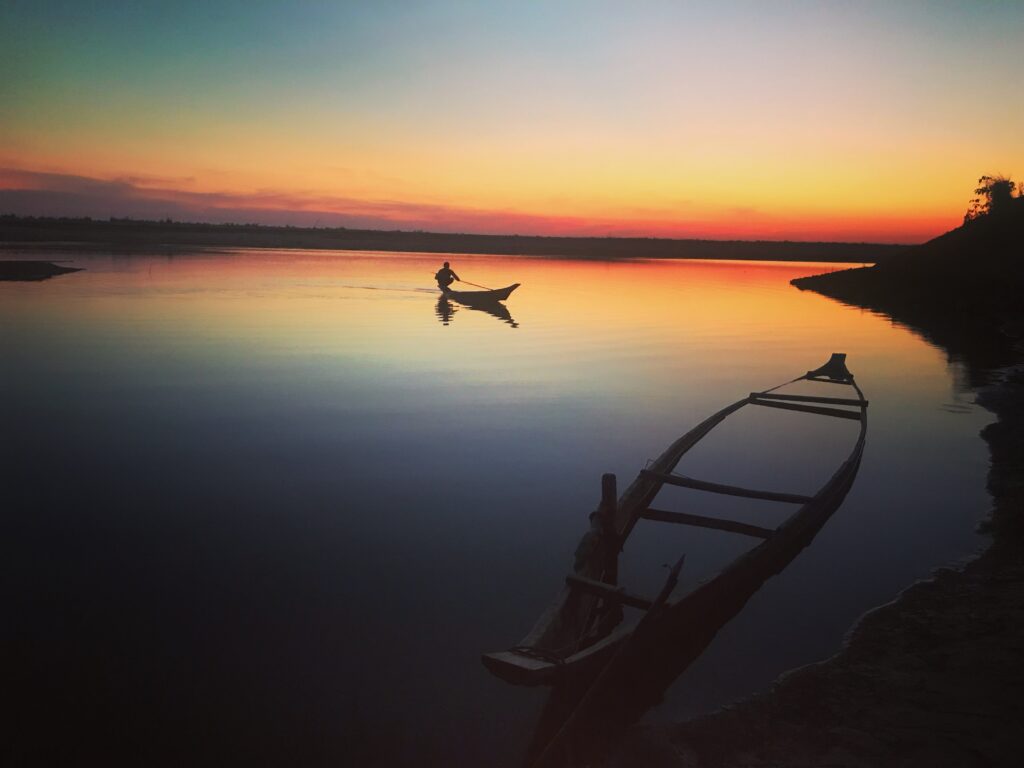
Among the Idu-Mishmi of eastern Arunachal Pradesh, traditional ritual specialists are called upon to communicate with rain spirits, seeking their intervention both when the rains fail to arrive and when incessant downpours raise fears of catastrophic flooding. The Idu-Mishmi term for rain, “ayyo or ayyoyo,” carries deep cultural significance within these practices. Jibi Pulu, an Idu-Mishmi community leader and environmental activist, points to how different kinds of rainfall were once understood to perform distinct ecological functions in the forests of the Dibang Valley. Certain rains signaled the shedding of leaves, others supported flowering cycles, while some heralded the arrival of migratory birds that seasonally visited the region’s rich forest ecosystems. However, he observed that such patterns have become increasingly difficult to anticipate, as deforestation, climate change, and human intervention have disrupted environmental rhythms that earlier generations could interpret with a high confidence.

Many Idu-Mishmi elders similarly attribute the growing unpredictability of rainfall and the increasing occurrence of extreme floods on the Dibang River and its tributaries to a deterioration in the relationship between people and the natural world. They regard practices such as the indiscriminate slaughter of animals and the growing trend of winter picnics on dry riverbeds (where meals are prepared directly on the exposed riverbed) as acts that offend river spirits. In their understanding, these transgressions disturb the balance between humans and the spiritual forces inhabiting the landscape, contributing to erratic weather patterns and destructive flooding events. Some historic flooding events are referred to by communities with names of where such flooding originated, such as the “China-paani” of the year 2000 and the recent episodes of “Bhutan-baanpaani” along the Bhutan–Assam border. This vocabulary has expanded to include specific dam-induced floods such as Ranganadi-floods in Assam.

Culturally Grounded Approaches
The diverse linguistic expressions, traditional knowledge systems, and lived experiences through which indigenous communities across Northeast India understand rainfall, storms, climate variability, and recurring flood events deserve to be documented, connected, and amplified within broader conversations on environmental democracy and transboundary cooperation. Bringing these perspectives together can help foster more inclusive dialogues across the Eastern Himalayas and the Patkai mountain ranges, enabling local communities to participate meaningfully in decision-making processes concerning ecology, environmental governance, infrastructure development, disaster preparedness, crisis communication, and other issues that directly shape their everyday lives and livelihoods. For generations, communities have relied on close observation of their surroundings to interpret changes in weather and rainfall patterns, rhythms of rivers, and flood cycles.

All photos courtesy of Mirza Zulfiqur Rahman.
[This is the second in a multi-part series published in collaboration with the Centre of Excellence for Himalayan Studies, at the Shiv Nadar University, Delhi NCR, a research center focused on the economy, borders, identities, environment, and regional geopolitics of the wider Himalayan region including the Hindu Kush and the Karakoram.]